Monday, March 18, 2013

How TV Nearly Killed Cartoons (Animation of the 1970s-80s)


If you consider the above actually good, your nostalgia filter needs desperate cleaning.

Many people have a hard time recalling animated television series from the 1970s to the earlier half of the 1980s and the ones they do mostly are for a bad reason. Limited animation had been used for about ten years prior to the invention of television, but was created for artistic purposes not for budget reasons. UPA, as mentioned earlier on this blog, was a pioneer in the field. Some of the studio's most famous creations include Mr. Magoo, Gerald McBoing Boing, and the feature length film Gay Purr-ee. Other studios began to catch on to the popularity of limited animation and companies such as Hannah Barbara began to realize that the technique could also be used to save money. By the time television had become commonplace, animated series turned to limited techniques in order to deal with smaller budgets and produce large numbers of episodes. American cartoons also became increasingly more 'kid friendly' to appease moral watchdogs and sensitive parents. By the late 1960s, theatrical cartoons were no more.   

Lack of budget (and creativity) resulted in many shortcuts. 

Early on animation on television was certainly aimed for the family crowd, but was of decent quality. Jay Ward is fondly remembered for bringing TV its first cartoon, Crusader Rabbit, in 1949 and for The Rocky and Bullwinkle Show (1959-1964). His cartoons had simple yet appealing character designs, good voice acting, and had humor both for children and adults alike. Hannah Barbera's earlier cartoons also were fairly enjoyable for a period of time. Huckleberry Hound and Yogi Bear became household names and The Flintstones (1960-1966) was the first primetime cartoon and had a sizable older fan base, paving way for shows such as The Simpsons three decades later. Another noteworthy cartoon was Beany and Cecil (1962-1969) by ex-Warner Bros animator Bob Clampett, which was well known for its crazy humor, slapstick, and puns.


Crusader Rabbit, the first cartoon to be made for TV.


Jay Ward and Hannah Barbera made excellent cartoons early on. 

Sadly, this would not last. As the temptation of milling out more and more cartoons at lower and lower production costs loomed, the quality of TV animation plummeted drastically. This made the business executives very happy and appeased more conservative groups wanting safe, sanitized cartoons for their children. And since young children will watch anything put in front of their faces, they did not complain about the low quality of these new cartoons and many weren't even exposed to older theatrical animated series or TV series to compare them to. (Unless, in some circumstances, these older programs were censored.) The regime of Saturday morning cartoons and educational programs were demanded by groups such as Action for Children's Television. Thus, public opinion changed to treating animation as 'kid's stuff' an attitude that still persists to a certain degree today. Filmation, Hannah Barbera, Ruby-Spears, and other companies regurgitated Scooby-Doo knock-offs and stale storylines at an astounding rate. The dismay of unhappy animators and certain film critics were largely ignored.

This was a great blow to many artists in the medium who had to work on cheap products in order to stay competitive. The influential cartoons of Warner Brothers, MGM, UPA, and other former powerhouses had gone by the wayside. Disney was struggling just to stay alive at a certain point and was even at danger of closing a few times. (Which is almost unimaginable today considering how much of a monopoly the studio has become!) Walt had died, many of Disney's older animators had left or retired, and traditional animation at the studio had become very expense. (This was due to Sleeping Beauty not earning back its cost at the box-office, forcing Disney to rely heavily on xerography tracing and recycling animation from its previous films.) The result of these unfortunate studio woes resulted in an extreme dearth of creativity. Mediocre or just plain terrible TV shows dominated, including the likes of The Archie Show (1968-1970), The Groovie Goolies (1970), The Jackson 5ive (1971-1973), Super Friends (1973-1985), and Jabberjaw (1976-1978).


The animators were so lazy, they didn't even bother to color in the eyes.


One word: gaudy. 


Let's pitch a Scooby-Doo clone, but with a shark...in a band! Brilliant, the kids will never notice!

The quality of American television animation continued to decline into the 1980s due to over-excessive merchandising. Many 'popular' cartoons of the era were little more than product commercials solely created to get parents to buy toys for the their children. Cartoons following this trend included Transformers, My Little Pony, Care Bears, He-man, Jem, and even a show about a rubik's cube. Super Hero cartoons sanitized for younger audiences, such as, The New Adventures of Batman (1977) and Spider-Friends (1981-1983), were also common at the time. Speaking of sanitized, it is rather hilarious that several R-rated movies were adapted into Saturday morning cartoons. Parents were actually ok with their childern watching pc versions of Rambo and Robo-cob?! Video game based shows also plagued the 80's, the most notorious being The Super Mario Bros Super Show and The Legend of Zelda (both 1989). 


Umm, wow. How was this even made? It's so bluntly racist!


Not another Care Bears clone!


Hannah Montana + Barbie + KISS = Jem 


Warning: Not the Batman your teenage son wants for Christmas. 


Because every kid wants to watch a cartoon about a toy box.


In other countries, the state of animation was not so dire. In Europe, most of the budget went to making the occasional high profile film, such as The Yellow Submarine (UK, 1968), Watership Down ( UK, 1978), or The King and the Mockingbird (France, 1980). Russia primarily focused on making short films both for adults and childern, such as Hedgehog in the Fog (1975), Firing Range (Polygon) (1978), and The Tree and the Cat (1983). Only very occasionally were TV series made, as most countries found it hard to compete with America's excessive output of cheap cartoons. Arguably, the most successful series outside the USA were Danger Mouse (UK, 1981) and Nu Pogodi! (Just You Wait!) (Russia, 1969-2006).  The only country that churned out TV animation rivaling that of America was Japan.

It is interesting to contrast the state of American animation to Japan. Yes their were forgettable, more merchandise-driven based franchise shows such as Speed Racer (1966-1968), Science Ninja Team Gatchaman (1972-1980), and Getter Robo (1974-1975). However, there were also more intellectual and creative shows created at time due to the anime revolution of the late 1960s as a result of social unrest and artistic rebellion. (Two of the most prominent works in the 1960s responsible for this were Horus: Prince of the Sun and The Vampires, as mentioned earlier on this blog.) Before the revolution, anime was a lot like 'typical' American films in the vein of Disney. Princess Knight (1965) and The Wonderful World of Puss in Boots (1969) are examples of the 'old hat' of anime.


Early anime was a lot like Disney.


Most Americans tend to think that 1970s anime was 'just giant robots' because mecha was the primary genre that made it overseas to the USA.

Some of the most fondly remembered anime series came out the 1970s-1980s, a period often considered a 'golden era' for animation in Japan. Lupin III no doubt shocked audiences when it first appeared on TV in 1971. It was the first truly 'adult' anime brimming with black humor and sexual innuendos. Although somewhat tame by today's standards, the show caused enough controversy when it originally aired that Hayao Miyazaki and Isao Takahada (whom you may have heard of) were brought in to make the show a bit more family friendly and focus more on slapstick comedy. Initially, Lupin flopped, but quickly attained cult status. It became successful enough to spawn three other series and several movies and TV specials. Since then, Lupin and his criminal hijinks have become as familiar to Japanese audiences as Bugs Bunny is to Americans.

Miyazaki and Takahada would later move on to Nippon Animation. There Takahada directed several very influential anime series based off classic childern's novels, including Heidi, Girl of the Alps (1974) and Anne of the Green Gabbles (1979). Miyazaki made his big break with Future Boy Conan (1978) before he and Takahada established Studio Ghibli and the rest is history. Another notable Nippon anime was Dog of Flanders (1975), a very bleak but beautiful series by Yoshio Kuroda.

Popular genres of the time were sports dramas, such as Ashita No Joe (1970), and fantasy space operas. Several sci-fi manga by Leiji Matsumoto were adapted to TV including Space Battleship Yamato (1974) and Galaxy Express 999 (1978). The historical drama, Rose of Versailles (1979), was about a women raised as a man during the class clash of the French Revolution. It was notable for taking the risk of introducing (possibly) bisexual characters to popular anime and for its tragic ending. Anime legend Osamu Tezuka also managed to finally remake two of his most beloved series, Astro Boy and Jungle Emperor Leo (Kimba the White Lion) with a larger budget and without the constraint of censorship.


Lupin III, the first anime series for a more adult audience.


Sport dramas, such as Ashita no Joe, are exceedingly popular in Japan.


Galaxy Express 999, a popular series dealing with death, immortality, and betrayal. 


The Dog of Flanders: it will make you cry.


Future Boy Conan is still considered to be one of the greatest cartoon series ever.

Towards the end of the 1980s, things began to change again for American animation, but fortunately for the better. After realizing that the competition from Don Bluth and other independent animators were taking away from their market, Disney realized it had to shape up in order to survive. Thus the company began vigorously training a new crop animators and released Who Framed Roger Rabbit? (1988) and The Little Mermaid (1989), starting a successful period during the 1990s of revival known as the Animation Renaissance. Other companies, like Warner Brothers and Hannah Barbera (now Cartoon Network), began to make successful cartoons again, such as The Animaniacs (1993-1998) and The Iron Giant (1999). Newer studios such as Nickelodeon, Dreamworks, and most notably, Pixar, were also met with great success during this era. Many of them continue to be important to the animation industry today.


Everyone's reaction to this movie: 'Disney is alive?! :D" & "Thank God we don't have to put up with cartoons like Fangface anymore!"

Saturday, March 16, 2013

The Life of Pi (Review)

Director: Ang Lee

Company: Rhythm and Hues, Fox 2000 Pictures

Year: 2012

Country: USA


A story about a boy....and his tiger.

One of the most widely talked about films last year was Ang Lee's Life of Pi, winning four Academy Awards and being nominated for seven others. Based off the award winning novel of the same name by Yann Martel, Pi is about how a young man manages to survive a shipwreck and finds companionship in the most unexpected of all places. Pi Patel is a very inquisitive and intelligent person. Since a young age, his curiosity and acceptance of others led him to follow three religions at once (Hinduism, Christianity, and Islam) much to the surprise of his family. Pi's way of thinking and behavior is accepted by his mother, but his more conservative father is not so open to Pi's beliefs and sees his son as irrational. When Pi is 16, his father decides to move from India to Canada in order to earn more money and sell most of their zoo animals. Unfortunately, the Japanese cargo ship Pi and his family is on sinks during a terrible storm. Pi, an injured zebra, a female orangutan, a spotted hyena, and Ricard Parker (a tiger) are the only survivors. Now Pi must find a way to survive alone, in the middle of the ocean, and also keep the tiger fed in order to avoid being eaten.


This was so brilliant I had to reblog it. Credit goes to Rick Slusher. 

One of the best aspects about this film, aside from its stunning visuals, is the fact that it can pull off telling such a heartfelt and fantastical story with a very limited cast. The vast majority of the film takes place on a small boat in the ocean with Pi, portrayed by actor Suraj Sharma, and Richard Parker. If the film was not directed so skillfully, this situation could quickly become boring for the audience. But Life of Pi manages to keep its viewers interested by showing Pi's inner dilemmas and flashbacks as he contemplates how to survive and maintain his sanity. The way Pi must painstakingly must teach himself to fish, collect water, and tame Richard Parker will surely make many people feel fortunate for their own comparatively easy lives. Interestingly enough, Pi discovers that taking of Richard Parker has given him the motivation to stay alive. This is not just because Pi is fearful for his own life, but truly cares for the tiger. At one point, Richard Parker even falls off the boat and is unable to climb all the way back up and is left hanging helplessly on its side. Pi could have left Richard there, but instead lets Richard live because he sees the tiger as his only friend left in the world. 


If situations become tense, sometimes it is necessary to take risks.

Another interesting aspect of Life of Pi is that audience is left to interoperate wether or not Pi's fantastic journey actually happened the way he said it played out. After Pi reaches land in Mexico, ending his 227 day journey, he is questioned by two Japanese insurance agents of the sunken freighter. They find his tale to be unbelievable and ask him for the 'real' version. Unable to convince the two men, Pi tells them another version. In this story, he shared the boat with his mother (the orangutan), a Buddhist with a broken leg (the zebra), and a mean-spirtied cook (the hyena). The cook kills the Buddhist for food and kills Pi's mother in a fight. Pi later returns to the boat and kills the cook. Thus, Pi is Richard Parker himself in the story. The audience is left deciding which version of the story they believe. The novelist who interviews Pi believes in the story with the tiger, despite its strangeness. It is possible that Pi may have created the story with the tiger as a means of coping with his difficult situation or hallucinated certain events (such as the carnivorous island inhabited by meerkats). However, the tiger story could just as well have happened. Either way, Pi survived his life changing journey through faith and his determination and will to live.

Speaking of the movie's special effects, one of the most remarkable things about the filming of Life of Pi is that all of the ocean scenes were shot in a giant wave tank built from an abandoned airport. (In fact, it is the world's largest self-generating wave pool, carrying up to 1.7 million gallons!) The creation of Richard Parker and the film's other visual effects were provided by Rhythm and Hues, which is sadly facing bankruptcy. R&H was contacted for providing the special effects due to animating Aslan the lion in The Chronicles of Narnia (2005). Below is a short clip showing how Richard was brought to life.


Pi has some of the most gorgeous CGI visuals ever created. 

If you have already not seen this film, do yourself a favor and rent it. Life of Pi is one of the most unique and enjoyable of movies to come out recently. Not only is it a visual feast, but it has a memorable story which may seem simple at first, but can be analyzed from different perspectives. Life of Pi is sure to please fans of the novel and many critics alike.


Fun Fact: Richard Parker was named after several real life shipwreck victims.


Rating: 4.5/5

Wednesday, March 13, 2013

A Crazy Cartoon Bus


When part of my family was visiting the Oahu in Hawaii, they sent me this picture of a 'Family Fun Bus' with various cartoon and video game characters painted all over it. The best thing about this kitsch little piece of American pop culture? It's got Br'er Rabbit on it, a character who hasn't been seen outside of the Disney ride Splash Mountain for years due to racial controversy surrounding the film The Song of the South. (For a challenge, try to name all the cartoons appearing on the bus. If you can, you win the title of 'Animation Nerd of the Year.')

Monday, March 11, 2013

New Posts Coming Soon! (I Promise!)

Hi all. Recently I have been very busy studying for finals which is why I have not posted for about ten days. I should begin posting regularly (every three to five days) within in the next week and half. Until then, it is likely that I may not post at all or only write very short entries. Hang in there and wish me luck! Also, thanks for over 1,500 page views. I love you guys. :)


Saturday, March 2, 2013

Animated Films that Never Were (Disney Edition)

Given Disney's long history as an animation powerhouse, it is not too surprising that several films over the years were purposed, but never came into fruition. Many of Disney's films have spent time in development hell (such as the Emperor's New Groove, Alice in Wonderland, and The Snow Queen [now renamed 'Frozen'].)  Here are some of the most interesting ideas that were scrapped due to budget reasons or other difficulties.

1.) Reynard the Fox / Chanticleer 


Original concept drawings of Chanticleer and Reynard by Marc Davis.

When Walt was still alive, he considered adapting the fable of Reynard the Fox and his rivalry with the noble rooster Chanticleer into a major motion picture. However, Walt later decided it would be in the studio's best interest to drop the project. This was because Reynard could be a bit of a nasty character at times. The wily fox's pranks could be very cruel. In the original tales, he often commits acts of vengeance and is not below murder. However, Disney has adapted several other fairytales with originally dark plot lines to better suit general audiences (such as the The Little Mermaid.) Another explanation as to why Reynard was abandoned would be that an antisemitic version of the story was written during the Nazi Regime, featuring a rhinoceros as a Jewish stereotype. This, however, did not stop the fable of Reynard into being adapted into a stop-motion film by Ladislas Starevich in 1937.


Why Disney abandoned the film.


What they settled for. 

However, although Reynard was scrapped it greatly influenced Robin Hood (1973), which was the second film made after Walt's death. (The first being The Aristocats.) Both of the titular characters are foxes who are cunning and use many disguises to carry out their tricks. Some of the film's other characters were also influenced from Reynard, including the Sheriff of Nottingham (partially based off Isengrin the Wolf) and the fact that the inept king is a lion. Ex-Disney animator Don Bluth made his own adaptation of Chanticleer entitled Rock-A-Doodle in 1991. The less spoken about it the better.


This movie is a disgrace. Oh, Don Bluth how you have fallen.

For those curious, more can be read about Reynard and Chanticleer here and here. A book written about the film's history can also be purchased on Amazon.


2.) Roald Dahl's Gremlins


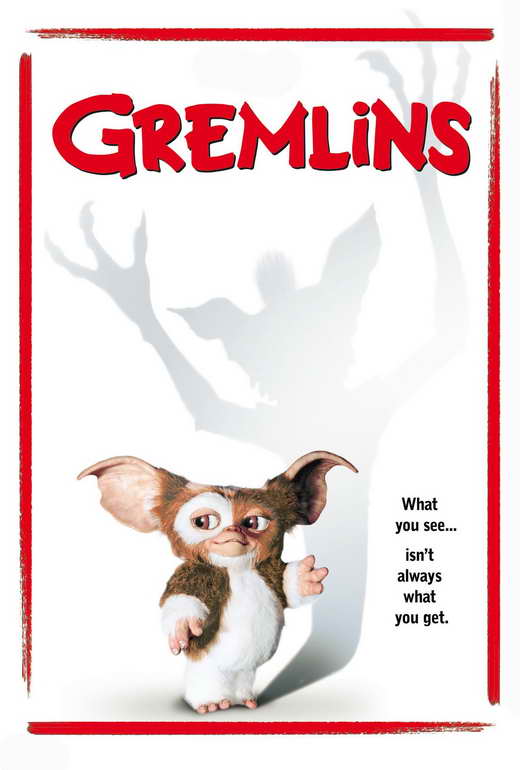
Note, these two films have nothing in common.

Roald Dahl was best known for his children's books, but also wrote several brilliant short stories and, in the 1940s, he penned a script for Disney. The Gremlins was meant to be released in the 1943. It was about a team of British pilots befriending small mischief making creatures that enjoy drilling holes in airplanes. If made, this would have been Disney's first major film to be not based upon a fairytale or folk story and to be set in modern times. The Gremlins was scrapped because the animators found it hard to make the gremlins appear sympathetic and the film was in production for so long, it would have been 'outdated' by the time it was released. A lot of money was put into advertising the film and lots of merchandising was released to promote it, but it never came into fruition. However, due to public curiosity surrounding the film, the book tie-in has recently been republished and the character, Gus Gremlin, appeared in the video game Epic Mickey.  


The pilot makes an unusual new friend.


An avid fan explains the history behind Disney's Gremlins


3.) Where the Wild Things Are


An important work, despite never being made.

Before the Animation Renaissance, Disney created a test-film based off the iconic children's book Where the Wild Things Are in 1983. It was a landmark for the studio and animation because it was the first cartoon to utilize the blend of traditional animation and computer generated imagery. Also, it was created by John Lasseter, the man who made Pixar a household name and directed Toy Story in 1995. The animation for the film was provided by Glen Keane, who later designed several Disney characters including Ariel, the Beast, Aladdin, and Tarzan. A film adaptation was considered but the technology was too expensive at the time for it to be economically feasible. This short has no relation to the 2009 movie by the way.


A clip from a documentary about Disney explaining the 30 second test.

4.) Roger Rabbit 2


Who knew the public would love a crazy albino rabbit?

Love it or hate it, there is no denying that Who Framed Roger Rabbit? made a huge impact when it was released in 1988. It was the first project by Disney to be economically and critically successful since Walt died during the production of The Jungle Book (1968). The film helped renew interest in cartoons by creating complex animation in homage to classic Hollywood. Fueled by the success, Disney would go onto create The Little Mermaid (1988) and The Beauty and the Beast (1990), entering the Animation Renaissance. So it may seem surprising that Disney never took the opportunity to cash in on Roger Rabbit by making a cheap-quel....err, sequel.

Roger Rabbit: The Toon Platoon was planned as a prequel about Roger Rabbit before his Hollywood days serving in WWII. Roger must rescue Jessica who has been kidnaped by the Nazis to create propaganda broadcasts. He also later finds out his father was Bugs Bunny. This idea was so outrageous that it is obvious to see why it was scrapped. (Steven Spielberg, who helped fund the first film, felt that it would be wrong to work on the film after directing Schindler's List.)


 "Here's my script. Roger Rabbit fights Nazis! I'm sure families well love it!"

The sequel was reworked and retitled Who Discovered Roger Rabbit. The plot was changed to be less controversial and was about Roger's rise to stardom. Some test footage was completed in 1998 utilizing CGI, instead of traditional animation. The test failed to appeal to Disney, partially due to budget concerns. Apparently, director Robert Zemeckis is still considering making a sequel sometime in the future.


The CGI test footage.

5.) Fraidy Cat


If Disney made a Hitchcock film...

An unfortunate victim of Disney's Eisner-era in the early 2000s, Fraidy Cat was meant to be a CGI thriller-comedy film paying homage to the works of Alferd Hitchcock. It was going to be directed by the dynamic duo Ron Clements and John Musker, who brought us such classics as The Great Mouse Detective (1987), The Little Mermaid (1989), and Aladdin (1992). The film was to star a spoiled cat who is kicked out of his cushy lifestyle when he is falsely accused of a crime.


Some brilliant concept art showing off dramatic lighting. 

Essentially, Fraidy Cat was shut down because it was 'too unconventional' for the studio's standards and 'lacked money making potential'. Yet, Michael Eisner was willing to green light films such as Home on the Range (2004) and Chicken Little (2005), which were, let's face it, box-office turds and critical disasters. He ignored the fact that Clements and Musker, obviously knew what they were doing, considering that their films were big successes for Disney and they worked at the company for over thirty years! One of Disney's executives apparently said:

"...who today even remembers who Alfred Hitchcock was? So why would kids in 2009 pay good money to see an animated film that pays tribute to an old, fat, dead movie director?"

This statement is either blindly ignorant or just an excuse to say the film 'has no commercial appeal.' All I can say is thank god Eisner got booted out of Disney. His type and their 'Hollywood Formulas' appeal to no one but the lowest denominator. Not only do their films not stand the test of time, they stifle artistic creativity and any originality. To see a glimpse at what could have been, more can be read about Fraidy Cat here.


Best thing Mickey Mouse did since staring in his black-and-white cartoons.

6.) American Dog


Gambling in a Disney film. Hasn't been seen since...Pinocchio

Ok, this article has already complained a lot about Eisner, but American Dog had to be mentioned. American Dog was going to be a CGI film directed by Chris Sanders, the man behind Lilo and Stitch and How to Train Your Dragon. The plot was to be sort of 'a fish out of water' tale about a film star dog, Henry, who is ousted out of his comfortable lifestyle. Henry later befriends a large rabbit and a cat with an eye path as he tries to get home. More on the plot as follows:

"Henry, a famous TV dog, finds himself stranded in the Nevada desert. Out in the world for the first time, Henry's tidy life of scripted triumph has come to an end, and his 2,000 mile trek through the real world is just beginning. Henry is a popular dog. He stars in his own television series, in which he is a James Bond style secret agent who manages to survive the most wonderful adventures. Henry is the toast of the town, but then one day one of the stunts in his show goes terribly wrong, Henry loses consciousness, and when he wakes up he finds himself on a train, thousands of miles away from his home. Henry has been a celebrity all his life and does not know how to handle himself in this new situation, but luckily he is able to make some new friends that he convinces to get him back home."


Original character designs for Henry and Ogo by Sanders.


More concept art. The style is reminiscent of the paintings of Edward Hopper.

The project was canned not only due to Eisner's disapproval, but surprisingly by John Lasseter's as well. Lasseter apparently wasn't too fond of Leo and Stitch either, and consider's Sanders films to be 'too quirky.' Normally Lasseter's judgment is sound, but he recently directed those mediocre car movies, while condemning Sanders. (Too be fair, Sanders has always been better at coming with interesting ideas than directing.) So Sanders left for Dreamworks. It also didn't help that American Dog's plot was proposed around the same time of Toy Story 3's and Cars was also to be set in Nevada. The film was thus put on hold. 

Eisner left Disney in 2005, and Lasseter (now Principal Creative Advisor for Disney) ultimately decided to play it safe. The film was completely reworked and was treated as a 'B-movie' to Wall-E. American Dog soon became unrecognizable, save for the fact that the titular character is a star who needs to return home. It morphed into Bolt (2008), a somewhat cute (but ultimately cliche and passable) movie about a dog who thinks he has superpowers. Bolt suffers the most from its lack of originality and usage of standard character designs, which lack the unique charm of Sanders's original drawings. (It also includes Miley Cyrus voicing a main character....ugh.) For those curious, a certain blog has an excellent article about American Dog's history.


The film ultimately became the generic Bolt. (Complete with the 'Dreamworks Smirk'.) 

7.) Newt


The visuals were lovely, but the plot was too familiar. 

Okay, technically Newt was an axed Pixar film, but Disney owns Pixar. The film was announced in 2008 and was to be directed by sound engineer and long time Pixar veteran Gary Rydstrom. The project was abandoned in favor of Brave. On hindsight though, this was probably the better choice. Newt's plot was very similar to two other animated films coming out about the same time it was scheduled to be released, the Blue Sky movie, Rio, and the abysmal Alpha and Omega. All three films were about two animals of opposite genders (and personalities) having to overcome their differences as they embark on some sort of journey. Thus, Pixar decided it would be for the best to avoid the issue of dueling movies. The only thing this film seemed really to have going for it was it's beautiful concept art. Coincidentally, Brave, the film that replaced Newt, sports gorgeous backgrounds and complex character rendering that required Pixar to rewrite its animation system for the first time in 25 years.


The film that replaced Newt