Showing posts with label live action review. Show all posts

Sunday, March 2, 2014

Labyrinth (Review)

Director: Jim Henson

Company: Jim Henson Company, Lucasfilm, TriStar Pictures

Year: 1986

Country: United States, Britain


Should this film be remembered as a flawed box office flop or a beloved cult classic?

Often considered to be the spiritual successor of Jim Henson's The Dark Crystal, Labyrinth is a far more lighthearted (and often rather goofy take) on a young teenager's wild imagination and European fairytales. The script for the film was conceived by both Henson and George Lucas and was inspired by the children's book, Outside Over There, by Maurice Sendak (author of Where the Wild Things Are). It featured many great special effects with complex puppetry and animatronic characters brought to life from the drawings of Brian Froud, a renown fantasy artist. Labyrinth also had cutting edge CGI effects and featured David Bowie in a staring role.


Well, cutting edge for 1986 anyway.

Despite all of the talent involved, Labyrinth was initially a box office disaster, only earning back $12,729, 917 for its $25 million budget. The failure of the film to capture the favor of audiences or critics upon its release was so profound that Jim Henson did not direct any other feature films before his death in 1990. Despite this disappointment, however, the movie has gained a steady following over the years and has become a cult classic among fantasy fans and Bowie lovers. For some reason, a sequel in the form of a manga was even published by Tokoyopop between 2006 and 2010. In 2012, another graphic novel company, Archaia Studio Press announced that it is in the process of developing a comic book prequel for Labyrinth.

Labyrinth opens with an barn owl spying on Sarah Williams, a teenage girl who is reciting lines from her favorite book (which is also called Labyrinth) in a park. After realizing she is running late, Sarah rushes home to babysit her younger brother, Toby. Sarah becomes increasingly upset when she is confronted by her impatient stepmother and discovers that her teddybear is missing from her room. She finds the toy in her Toby's room and angrily tells him that she wishes the goblins would take him away. Toby suddenly vanishes. The owl flies into Sarah's room and reveals himself to be Jareth, the king of goblins. He tells the alarmed Sarah that she must make her way through his labyrinth within thirteen hours if she wants her baby brother back. He then transports Sarah to the front gate of the labyrinth.

Sarah meets many strange creatures during her journey, three of which decide to travel with her. Hoggle is an obstinate old dwarf who is secretly a spy for Jareth. He is torn between his loyalty to his master and his friendship with Sarah. Ludo is a large and slowwitted but gentle yeti-like creature whom Sarah takes pity on after he is tormented by a gang of goblins. And finally, Sir Didymus is a small yet chivalrous (and often rather illogical) fox-like knight who rides an Old English Sheepdog. Despite receiving help from her new and rather unusual friends, Sarah must overcome several obstacles along the way, such as a Knights and Knaves logic puzzle and the notorious Eternal Bog of Stench. She must also beware of Jareth himself, who has taken a liking to Sarah and constantly tries to convince her to stay with him... 


…Apparently, its because no girl can resist 'the excitement of David Bowie'.

If Jareth's labyrinth has one thing going for it, it is a visual marvel. This is no surprise given the production studio and budget behind Labyrinth. While the sparse CGI that appears in this film is obviously dated, its practical effects have aged very nicely. Brian Froud's designs may not exactly be cute, but they have certain rough charm to them and transition well to the screen. The techniques used to bring the various inhabitants Labyrinth to life are technically a huge step up from those used in The Dark Crystal four years prior. The various sets and backdrops in this movie are also clearly a labor of love. (The art geek in me also loves all of the references to M.C. Escher.) Once Sarah is taken to the front of the labyrinth, it truly does feel as though she has stepped into another land.


It's easy to got lost in the scenery of this movie.

There are, however, several things that hamper this movie's entertainment value. For one, the various David Bowie songs that pop up through out the narrative simply don't suit the visuals at all. (And, for the record, I do enjoy most David Bowie songs.) Yes, it was the '80s. Flamboyancy and Glam Rock were in, but they don't have the timeless sort of quality that one would expect from a fairytale story. On a similar note, this film is rather, well, campy. Again, that may be part of the nostalgic appeal of Labyrinth for some, but it makes everything on screen seem faker than it should. Many of the goblins and other creatures in the film, for instance, are voiced with high pitched, grating cartoonish voices which disengage the viewer the moment he or she hears them. It also doesn't help that the sound effects in this film haven't aged very well either.


It may be cheesy as hell, but just try and get it out of your head.

David Bowie songs and goofy tone aside, many of the characters in Labyrinth are either flat or annoying. This is certainly the case for the film's protagonist. While Sarah's family is briefly introduced at the start of the film, the audience is not given enough time to know or fully understand them or the situation. Sarah's behavior towards her family thus comes off as very bratty. This would be more tolerable if Sarah's character were to develop more over the course of the film, but unfortunately, it doesn't, at least not by much.

Sarah, being the protagonist, does of course learn certain things on her quest. She makes amends with her brother and becomes more appreciative of her 'boring life at home'. However, she complains quite a lot through her journey and relies a bit too much on her companions, making decisions of her own only when the plot requires it. Sarah's portrayal by Jennifer Connelly leaves much to be desired. Perhaps if a more experienced actress took the part, the character would have faired better.  Like several other fantasies about young girls entering bizarre worlds (such as The Wizard of Oz and Alice in Wonderland), Labyrinth is symbolic of the transition from childhood to adulthood. However, Sarah is a hard heroine to admire. Perhaps Labyrinth should have followed one of its side characters instead.


Somehow this is not as intimidating as when Gandalf says it...

While Labyrinth is aesthetically pleasing and sports many unique visuals, it won't be remembered as one of the greatest fantasy films ever created. The film's narrative is rather muddled in places, it is too campy for its own good, and its protagonist leaves much to be desired. Still, I cannot bring myself to hate this film. The concept of behind Labyrinth is rather unique and its distinctive visual style allows it to stick out from several other mediocre fantasy films released in the same decade. (Apparently, Labyrinth was initially pitched as The Wizard of Oz meets Where the Wild Things Are.) Maybe Labyrinth would be more enjoyable if it was watched muted and the viewer were to imagine what the characters were saying. While The Dark Crystal may not be as accessible to causal film viewers than Labyrinth, it is ultimately a more ambitious and, dare I say, better film.


I still wish they published this magazine though.

Rating: 3/5

Tuesday, July 9, 2013

Modern Times (Review)

Director: Charlie Chaplin

Company: United Artists

Year: 1936

Country: USA


Work is hell, but this movie is bliss.

To say that Charlie Chaplin was one of the most famous actors who ever lived is an understatement. Chaplin was also the director, screenwriter, editor, producer and composer of all of his films. Chaplin's comedic films managed to and still continue to entertain due to their timeless subjects. Chaplin's most famous creation, the character of the Little Tramp, a bumbling vagrant with a childlike, goodhearted personality, is one of cinema's most recognizable figures. The Tramp does his best to appear like a gentlemen, despite his ill fitting clothes, and commonly falls victim to circumstance and consequence. Arguably, the most acclaimed films the Tramp starred in are The Kid (1921), The Gold Rush (1928), City Lights (1931), and Modern Times (1936). 

Modern Times is notable for a few reasons. It was the last of Chaplin's major films to feature the Tramp character, his first true "talkie", and was inspired by working conditions during the Great Depression. Modern Times follows the misadventures of the Tramp who is a factory worker on an assembly line. After enduring many grueling hours tightening bolts, being watched by his unsympathetic boss, and being used as guinea pig for the Bellows Automatic Feeding Machine (which badly malfunctions), the Tramp undergoes a major nervous breakdown. He gets sucked into the large gears of a machine and runs amok in the factory, only to be taken away by the medical ward. Once cured, the Tramp finds himself in various compromising conditions (being mistaken for a communist leader, getting sent to jail, and accidentally ingesting smuggled cocaine) before running into an orphaned gamine girl played by Paulette Goddard. The two then decide to travel together while avoiding the law and attempting to find steady jobs. Despite that the Tramp and the Gamine are constantly on the move and face many challenges, they remain cheerful, hopeful that, if they work hard enough, they can achieve a successful life together.


The Tramp quickly discovers that not all technology is practical... 

Besides being funny, this movie also manages to convey a great deal of social commentary. Modern Times's unflattering portrayal of the treatment of industrial workers apparently caused some controversy when the film was initially released. In the opening of Modern Times, the workers are seen flooding into the factory's gates, likened to a flock of a sheep, which reflects the workers' lose of self identity as they monotonously repeat the same tasks over and over. On the other hand, the factory's boss is shown to be completely dismissive of the welfare of his workers, being more concerned about how efficiently the factory runs and completing his crossword puzzles. Indeed, the factory's impressive machines, the exploitation of the workers, and the authoritarian mannerisms of the boss seem to recall the allegorical German film Metropolis (1927). The Tramp's playful antics keep this film from becoming too dire, however. When the Tramp goes on his crazy rampage in the factory, Chaplin plays the role very gleefully, obviously taking delight in wrecking all the machines on the set and squirting oil in the eyes of other factory employes.  (Chaplin grew up as a poor child in the slums of England, so he had reasons to poke fun at industry and people in positions of higher power.)


The looming presence of the Tramp's boss and the conditions he endures at work are certainly still relatable today. 

Paulette Goddard's performance as the orphaned waif is just as endearing as Chaplin's acting. A lovable street urchin, the Gamine is very hardworking and resourceful. First appearing about twenty minutes into the film, Goddard immediately catches the audience's attention while she is stealing bananas on a boat. She throws them to other street childern, carrying a knife in her mouth. She is one of the homeless people in this film who are portrayed sympathetically. Her family are victims of the broken wage system during the 1930s. They only steal because they need to do so in order to survive. The Gamine's scenes range from tragic (involving the death of her father and separation from her sisters) to whimsically lighthearted (when she and the Tramp try to live like a middle class family in a ramshackle house; or when she frolics in the toy display in an apartment store).  
   

Fun Fact: While Goddard was in Modern Times she was dating Chaplin and later would become his third wife.

Modern Times also manages to be very touching and sweet, but never overly so that it comes off as saccharine or too idealistic. Chaplin's innocent, cheerful portrayal of the Tramp manages to make otherwise serious scenes easier to swallow (and just plain fun). The faith that the Tramp and the Gamine put in one another is rather touching. The Gamine is forever loyal to the Tramp because he helped her escape the police. She puts up with his constant mistakes, loss of jobs, and frequent arrests. Likewise, the Tramp is always there to cheer up the Gamine when she most needs it. This film sends out a wonderful message that certainly spoke out to people during the Great Depression, and still does today. Life can be cruel and seemingly miserable. But as long as we keep our spirits up and continue trying, we can continue to move on.


Even in the midsts of depression, there is still hope.

Very few bad things can be said about this film. Although, the plot of Modern Times may seem simplistic by today's standards, its themes are universal and it isn't lined with any unnecessary frills. Modern Times is far more of a silent film than it is a 'talkie', but Chaplin's score and cinematography do a fine job of delivering emotional resonance and believability. Certain filmmakers today could learn a lot from the cheerful, confident direction of Chaplin's films. Sure, dark pulp stories can be great if they are directed skillfully, but overly cynical, violent films fail to connect with audiences emotionally and often don't create memorable (or likable) characters. 

Anybody who hasn't seen Modern Times is missing out on an essential piece of cinema. A good film is never to old to watch, and this one is a classic. There is a reason why it continues to be talked about despite being almost eighty years of age. Modern Times manages to be one of those few movies that is enjoyable to all ages and demographics. Next time it plays at your local film festival, run don't walk, to see Modern Times on the large screen. 

Nothing says 'the end' like walking out into a picturesque background! 

Rating: 5/5 

Sunday, May 5, 2013

The Dark Crystal (Review)

Directors: Jim Henson, Frank Oz

Company: The Jim Henson Company, Universal Pictures

Year: 1982

Country: United States, Britain


Dated but visually impressive, it's certainly a darker fairytale film than most audiences today are accustomed to. 

The Dark Crystal has become a cult classic over the years, being well known among fantasy and special effects enthusiasts. However, public opinion has always been somewhat divided about the film. Some regard it as an ambitious but flawed film, others love it, and certain people are absolutely frightened by it. (The Dark Crystal contains more instances of scarier imagery than most PG movies these days. Keep in mind that several 'adult' films coming from the same era - Indiana Jones, Jaws, and The Gremlins - were rate at PG when they first released.) Although The Dark Crystal was a huge undertaking for Jim Henson and his crew, spending over five years in production, it did relatively modestly at the box-office, perhaps due to competition from Spielberg's E.T. and the fact that the audience may have been expecting something more like The Muppets. (Both works were made by Jim Henson and utilized puppets, but the similarities end there.) 

The film takes place "in another world, in another time, in the age of wonder." In this world, called Thra, two prominent races emerged when the crystal cracked, causing a large chunk of it to fall off, resulting in chaos. These two races represent the opposing sides of human nature. The gentle and wise Mystics are very knowledgeable about the natural world, but lack the will to fight. The quarrelsome, violent skeksis have thus taken over much of the land. (Apparently, the vulture-like skeksis were based of off the seven deadly sins and Ms. Havisham from Charles Dickens's Great Expectations.)  Both they and the mystics are dying races, and their fates will be determined by the next Great Conjunction. If the crystal is not healed by the time the three suns meet, then the skesis will reign tyrannically forever. However, if the crystal is healed before the conjunction is over, then the mystics and skeksis will reunite as a whole, and peace will be restored.

At the center of this conflict is a young elf-like boy named Jen. Jen is a gelfling, the last of his kind. All of the other gelflings were victims of genocide, killed off by the skeksis due to a prophesy stating that the crystal would be healed "by gelfling hand or by none." Raised by the Mystics, Jen is told to meet Aughra, an eccentric astrologist who lives in an observatory. Aughra gives him the shard, before her home is wrecked by the Skeksis's garthim warriors. Jen manages to escape into the swamp, were he discovers that he is not actually the last gelfling. He meets Kira, a girl raised by the swamp's Podlings, who can communicate with animals. Kira proves to be a very useful guide and offers Jen moral support. Both must keep on constant guard of danger. In addition to the garthim, both Jen and Kira must also beware of the Chamberlin, an exiled Skeksis with an annoying habit of whimpering, who plans to bait both of them back to the castle were his clan resides.  


The kind and caring Mystics contrast with...


... the cruel and nasty Skeksis. (Both representing the divided sides of human nature.)

From a production standpoint there is much to be admired, given how much labor was required to bring The Dark Crystal to life. Although the gelfling puppets have a harder time getting emotion across their faces except for mild shock or surprise, none of the other characters suffer from this problem. (Jim Henson and his staff would continue to make improvements on the range of expressions their puppets could display in the future, utilizing robotic technology.) Indeed, the height of the technology used in The Dark Crystal was bicycle chains. Today, it is so easy to overlook how intensive filmmaking can be, especially with the saturation of CGI in the market. Each puppet was performed by trained professionals or gymnasts. The skeksis were acted by men crawling on their knees, holding up an arm over their heads, to control the creatures' necks. The garthim costumes were so heavy, that the people inside them had to take breaks every five minutes, and the costumes had to be lifted off of them with cranes. The Dark Crystal's unique and intricate design was created by Brian Froud, a famous fantasy illustrator who also provided concept art for Labyrinth (1986), The Storyteller (1989), the infamous Little Nemo (1989), and Peter Pan (2003). (Froud's son, Toby, appeared as the baby in Labyrinth and would later help with the production design on Peter Jackson's The Lord of the Rings trilogy. Froud's wife, Wendy, met Brian on the set of The Dark Crystal and was responsible for the puppet work on Yoda for Star Wars.)


To appreciate all the details in this movie, it has to be seen on a large screen. 

The Dark Crystal's soundtrack is another plus. It's complexity and variation really adds to the unearthly atmosphere of the movie. The Golden Globe nominee Trevor Jones provides a memorable score that combined dramatic symphonic orchestral style with period instruments and synthesizers. Perhaps the best pieces in the film are its overture, ''Love Theme", and "Gelfling Song."

The degree characterization in the movie is bit varied, but fairly interesting. Because they are so absolutely despicable, the skeksis can be a lot of fun to watch interacting with one another, once you are able to get over the creepiness factor. (One of the movie's more humorous scenes involves them eating dinner that rivals my family's Thanksgiving celebrations in its bad manners.) The fact that the skesis can come across as goofy at times, and terrifying at others makes excellent use of contrast. Speaking of contrast, the Mystics really do an excellent job of embodying this to the skeksis. Yes, the Mystics are relatively passive and only appear at the beginning and end of the film, but they are supposed to be less flamboyant and egotistic than the skeksis. Aughra is so bossy, grotesque, and uppity that she just demands attention whenever she is on screen. Frank Oz considered her to be, "So ugly, that she is beautiful." (Frank Oz also was going to be the original voice of Aughra, but this was dropped, likely because it made her sound too much like Fozzie Bear.) Fizzgig, Kira's dog-like pet, provides the most comic relief. His fearful nature causes him to constantly bear his large number of teeth, that take up most of his body when his mouth is open!

 As for the film's leads, Kira is probably the stronger of the two. She has is knowledge about the outside world than Jen, who has lived a relatively sheltered life with the Mystics prior to his quest. Her role was not that of a princess or 'distressed damsel' common in childern's media at the time. One scene even pokes fun at gender conventions. (Jen: "Wings? You have wings? I don't have wings." Kira: "Of course not, you're a boy.") Jen, however, is ironically the least interesting of The Dark Crystal's cast. He tends to simply react to what's going on around him and talk about the difficulty of his quest...that's about it. Perhaps this is because he is ignorant about many things in the outside world. (Jen can prove to be quite knowledgeable at times, however, like when he revealed that he possesses the ability to read.)   


This ball of fluff serves as comic relief. 

Of course this film is not perfect, its age shows and some of the dialogue is a bit cheesy, but not to the point that it makes The Dark Crystal bad. Personally, the 'darkness' of the film does not overly concern or alarm me. It is somewhat refreshing to see storylines in family films that tackle more mature themes or have slightly scary scenes. Kids will grow up after all, so they should learn that the world is not all jellybeans and rainbows! Just because the film was produced by Jim Henson, it certainly does not have to be 'cute' or avoid serious topics. (Henson's career was far more elastic than most people realize.) Many people compare this film to Labyrinth (1986), but The Dark Crystal was ultimately better received by the critics and did better at the box-office. (Labyrinth did gain a substantial fanbase later on with TV reruns, but Henson sadly never lived to see this.) I would have to agree with them, as Labyrinth, while still quite enjoyable in places, is a far 'safer' film and its David Bowie songs just don't suit its aesthetics (and this is coming from somebody who likes most David Bowie songs).


Skeksis: giving young childern nightmares since 1982. 

So is this film perfect? No. Is it worth seeking out if you are curious? Yes. If you are able to accept something slightly more unconventional than most Hollywood fair, forgive some of its quirks and age, and can appreciate handmade art, I strongly suggest seeking out The Dark Crystal. Never before has there been a film that stands out so distinctively in its visual style. Due to this factor, its reliance solely on puppets (no human actors), and its importance to the history of special effects, Jim Henson is said to have been most proud of The Dark Crystal out of all of his work. Appreciation for The Dark Crystal continues to grow, and it is now considered to be one of the greatest fantasy films ever made. 

Rating: 3.5

Saturday, March 16, 2013

The Life of Pi (Review)

Director: Ang Lee

Company: Rhythm and Hues, Fox 2000 Pictures

Year: 2012

Country: USA


A story about a boy....and his tiger.

One of the most widely talked about films last year was Ang Lee's Life of Pi, winning four Academy Awards and being nominated for seven others. Based off the award winning novel of the same name by Yann Martel, Pi is about how a young man manages to survive a shipwreck and finds companionship in the most unexpected of all places. Pi Patel is a very inquisitive and intelligent person. Since a young age, his curiosity and acceptance of others led him to follow three religions at once (Hinduism, Christianity, and Islam) much to the surprise of his family. Pi's way of thinking and behavior is accepted by his mother, but his more conservative father is not so open to Pi's beliefs and sees his son as irrational. When Pi is 16, his father decides to move from India to Canada in order to earn more money and sell most of their zoo animals. Unfortunately, the Japanese cargo ship Pi and his family is on sinks during a terrible storm. Pi, an injured zebra, a female orangutan, a spotted hyena, and Ricard Parker (a tiger) are the only survivors. Now Pi must find a way to survive alone, in the middle of the ocean, and also keep the tiger fed in order to avoid being eaten.


This was so brilliant I had to reblog it. Credit goes to Rick Slusher. 

One of the best aspects about this film, aside from its stunning visuals, is the fact that it can pull off telling such a heartfelt and fantastical story with a very limited cast. The vast majority of the film takes place on a small boat in the ocean with Pi, portrayed by actor Suraj Sharma, and Richard Parker. If the film was not directed so skillfully, this situation could quickly become boring for the audience. But Life of Pi manages to keep its viewers interested by showing Pi's inner dilemmas and flashbacks as he contemplates how to survive and maintain his sanity. The way Pi must painstakingly must teach himself to fish, collect water, and tame Richard Parker will surely make many people feel fortunate for their own comparatively easy lives. Interestingly enough, Pi discovers that taking of Richard Parker has given him the motivation to stay alive. This is not just because Pi is fearful for his own life, but truly cares for the tiger. At one point, Richard Parker even falls off the boat and is unable to climb all the way back up and is left hanging helplessly on its side. Pi could have left Richard there, but instead lets Richard live because he sees the tiger as his only friend left in the world. 


If situations become tense, sometimes it is necessary to take risks.

Another interesting aspect of Life of Pi is that audience is left to interoperate wether or not Pi's fantastic journey actually happened the way he said it played out. After Pi reaches land in Mexico, ending his 227 day journey, he is questioned by two Japanese insurance agents of the sunken freighter. They find his tale to be unbelievable and ask him for the 'real' version. Unable to convince the two men, Pi tells them another version. In this story, he shared the boat with his mother (the orangutan), a Buddhist with a broken leg (the zebra), and a mean-spirtied cook (the hyena). The cook kills the Buddhist for food and kills Pi's mother in a fight. Pi later returns to the boat and kills the cook. Thus, Pi is Richard Parker himself in the story. The audience is left deciding which version of the story they believe. The novelist who interviews Pi believes in the story with the tiger, despite its strangeness. It is possible that Pi may have created the story with the tiger as a means of coping with his difficult situation or hallucinated certain events (such as the carnivorous island inhabited by meerkats). However, the tiger story could just as well have happened. Either way, Pi survived his life changing journey through faith and his determination and will to live.

Speaking of the movie's special effects, one of the most remarkable things about the filming of Life of Pi is that all of the ocean scenes were shot in a giant wave tank built from an abandoned airport. (In fact, it is the world's largest self-generating wave pool, carrying up to 1.7 million gallons!) The creation of Richard Parker and the film's other visual effects were provided by Rhythm and Hues, which is sadly facing bankruptcy. R&H was contacted for providing the special effects due to animating Aslan the lion in The Chronicles of Narnia (2005). Below is a short clip showing how Richard was brought to life.


Pi has some of the most gorgeous CGI visuals ever created. 

If you have already not seen this film, do yourself a favor and rent it. Life of Pi is one of the most unique and enjoyable of movies to come out recently. Not only is it a visual feast, but it has a memorable story which may seem simple at first, but can be analyzed from different perspectives. Life of Pi is sure to please fans of the novel and many critics alike.


Fun Fact: Richard Parker was named after several real life shipwreck victims.


Rating: 4.5/5

Thursday, January 31, 2013

Metropolis (1927) Review

Director: Fritz Lang

Company: UFA

Year: 1927 (the most recently restored version from Kino International was released in 2010)

Country: Germany


One of the most influential films of all time with a message that is still relevant today.

Metropolis is one of the most recognizable movies in movie history. It was a product of the German Expressionist Era and one of the most elaborately detailed and expensive films of its time. Even if someone has not seen the film, it is likely that they will recognize its imagery and virtually impossible  for them to not to have seen another movie influenced by it (i.e. Star Wars or any other Sci-Fi film ever made). Metropolis is set in a futuristic dystopian society. The ruling elite live above ground in a vast city akin to paradise at the expense of the working underclass who live below them. Freder, son of the city's leader Joh Federsen, falls head over heels for woman named Maria. He attempts to follow Maria, but ends up getting lost in the worker complexes below. Freder is horrified by what he sees and later finds Maria. He agrees to help her work towards peace between the two classes by acting as mediator between them. However, Joh and the scientist, Rotwang, discover the plan. Rotwang kidnaps Maria and makes a robotic doppelgänger in her guise in order to manipulate the masses, and turns it against Joh.


How do you solve a problem like Maria? Apparently, Rotwang knows.

Metropolis, is at heart, an allegory about how society must learn to function in order to survive. It is a warning about the dangers of classism, worker exploitation, mob mentality, and corruption. Yet the film  also offers hope for a better future, stating that,"the mediator between the hands and the head must be the heart." Thus, in order for people to live together peacefully, they must be willing to put aside their differences and come to a compromise.

 Metropolis also uses lots of religious imagery to get across its message. In one scene, Freder sees a machine that some of the workers are operating explode, killing several people. Freder panics then hallucinates that the machine transforms into the terrible demon, Moloch. Moloch was a pagan deity that was provided human sacrifices. In another part of the film, Maria is preaching to the workers about her vision of peace. She mentions the Tower of Babel, which fell due to people working on it becoming to prideful and failing to understand each other. The tall building which Joh rules from is referenced as 'The New Tower of Babel' throughout the film, making the parallels clear. At one point, Freder trades places with one of the workers in order to experience what has been going on unseen his entire life. He works a grueling ten hour shift, managing the hands of a clock. As Freder strains to keep the hands in place, it resembles a crucification. This shows how the workers must sacrifice time each day, to the seemingly unappreciative elite.


Freder's terrifying vision of the M Machine transforming into Moloch.


"Father! Father! Will ten hours never end?"

Each character in Metropolis have widely varying motives and well developed personalties. Joh Federsen seems like a heartless man who rules with an iron fist, at first. However, we later learn that Joh cares deeply for his son. He is so stern partly because his wife died in childbirth and he fears losing Freder. Rotwang set the archetype of the 'mad scientist' character and represents the consequences of playing God. Freder acts as the audience's guide into the world of Metropolis. He starts of very naive, and somewhat spoiled, but quickly learns about the inequality around him after he meets Maria. He then acts as the 'link' to build understanding between the social classes. 

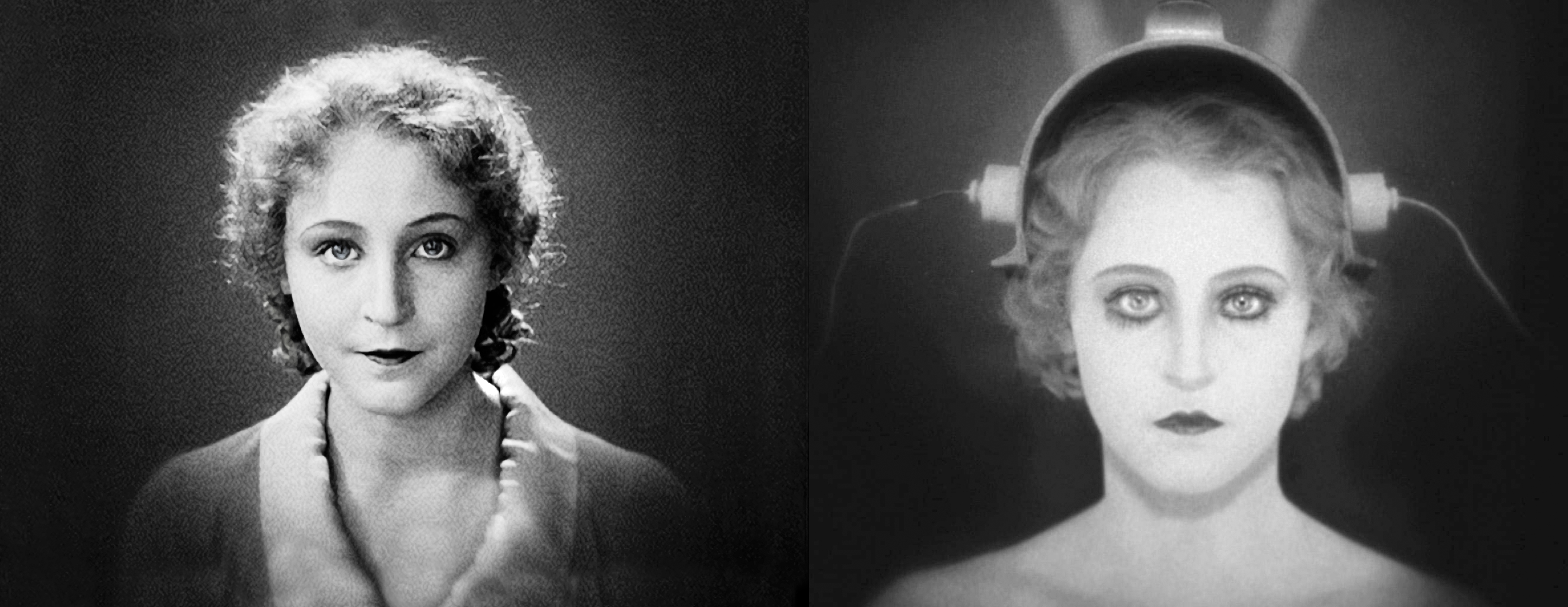
It is very interesting to compare Maria to her robotic counterpart. Maria is is kind towards all people, despite their social status, and cares a lot for the needy and their childern. The 'False' Maria exactly the opposite. She has been programed to deceive all men and urges the working class to act out violently, to rise up in rebellion against the upperclass (not caring that the worker's city is being flooded at the exact same moment!) The robot's behavior is reflected by actress Bridgett Helm's heavy makeup and jerky / eccentric movements. When Helm portrays Maria, she dresses more nicely and is far more composed. The scene where False Maria is depicted as the Whore of Babylon, represents the sins and lust of man. It also suggests that if the actions of Rotwang's invention were to go out of hand, there could be apocalyptic consequences. 


Maria vs False Maria


False Maria as The Whore of Babylon.

The cinematography of this movie is stunning, especially when you consider when it was made. The expertly made miniatures and large-scale sets prove that a film does not need to rely heavily on CGI in order to be breathtakingly beautiful. Each scene conveys a mood, in typical Expressionist style. It is very easy to be impressed by the glorious city of Metropolis, but also to pity the underclass who toil below in dismal conditions. The original score of the film, by Gottfired Huppertz, truly adds to the atmosphere of Metropolis and is, perhaps, one of the most haunting scores ever created for a motion picture. (And a good score is absolutely essential to keep an audience's attention for a silent film!)


The world of the elite.


The 'underworld' of the workers.

This movie is a definite must-see for anyone who is interested in film. Metropolis is a work of art. Not only is it beautiful to look at, but it also has a heart. Don't ignore it just because it is a silent film. If any film from our era is as good as Metropolis in 85 years, then we will be fortunate indeed. 

Rating: 5/5

Thursday, January 10, 2013

The Hobbit: An Honest Review

Director: Peter Jackson
Company: New Line Cinema / WingNut Films
Year: 2012
Country: USA / New Zealand


Does this highly anticipated film deliver?

Every so once in a while, there is a movie that comes along which leaves you with conflicting feelings. Unfortunately, The Hobbit: An Unexpected Journey is such a film. It suffers from being overstuffed with plot elements that were not originally from the book. Quite a few scenes are lifted from The Silmarillion (the inclusion of the Galaderial and Saruman at the White Counsel) or even created on the spot (like Radagast the Brown's rabbit sled). The Hobbit is a far simpler and shorter story than the Lord of the Rings, so really it should have been shot in two, or maybe even one movie. It is almost painful to admit that the animated TV special from 1977 actually follows the book more closely, despite its exclusion of the Arkenstone and the bear-man Beorn (not to mention its grotesque character designs).


Radagast's scenes are borderline ridiculous, involving blowdrying a hedgehog and driving a rabbit sled.


Yes, this version is actually more loyal to the book...

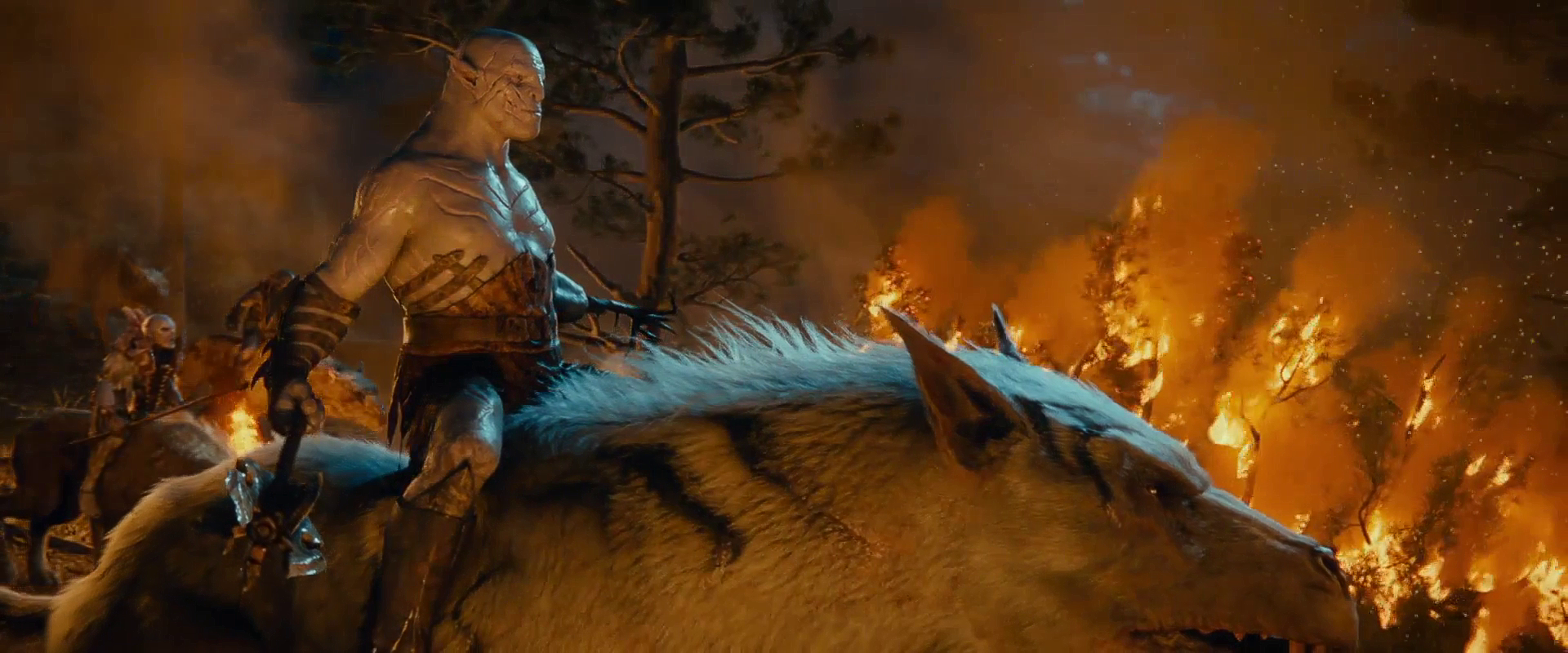
But by far the most glaring problem with this adaptation is the subplot involving Thorin and the white orc, Azog. Thorin already has enough of a reason to be a relatable character. He feels responsible for the loss of his home under the Lonely Mountain (which was taken by Smaug) and loathes the elves for not helping his people. Azog just seemed like an excuse to squeeze in more long, dragged out fight scenes and show off special effects. He has no character development and looks like a video game boss. (He has a giant hook for an arm. Seriously?) The excessive computer animation on the orcs and fight scenes actually makes the movie seem less real and more fake. Just compare it to the actors wearing orc makeup in the LOTR trilogy. 


Intimidating and believable orcs from the Lord of the Rings.


Unnecessary and fake-looking orcs from The Hobbit.

However, the film is not a complete disaster, far from it in fact. Andy Serkins as Golem and Ian Mckellen as Gandalf are great as always. The film does an excellent job of setting the scene in the Shire and remains easy to follow and relatively enjoyable for the first half. (Up until the point Radagast the Brown and the orcs are introduced.) The Goblin King is goofy, but definitely more enjoyable than the Azog. And of course the cinematography, landscape of New Zealand, and score are all quite breathtaking. 


Now I want to have a tour of Hobbiton.


Howard Shore is one of the best film composers of our time.

So overall, I would not recommend seeing The Hobbit in theaters. Diehard fans are sure to be disappointed and the second half of the film tends to drag on with cartoony action scenes. However, this film really is strong in places were it follows the book closely and is truly beautiful at times. For those curious, rent The Hobbit when it comes out on DVD, watch the good scenes and fast-forward through the bad ones.

Rating: 2.5/5