Showing posts with label CGI. Show all posts

Sunday, November 16, 2014

Big Hero 6 (Review)

Director(s): Don Hall & Chris Williams

Company: Disney

Year: 2014

Country: USA


We introduce to you, the most huggable robot ever!

Normally, this blog does not cover Disney films due to its primary focus being on obscure and foreign titles, but I decided to make an exception for Big Hero 6. It's not because the film is outside of Disney's comfort zone or that it offers anything out of the ordinary. It's simply a really fun and entertaining superhero flick with a lot of heart. Big Hero 6 is based upon the Marvel series of the same name, but it has far more in common with a typical Disney production than it does with the comics it is based upon.

In some ways, however, this seems to have worked in the film's favor. The comic's narrative has been streamlined to allow it to work within a 105 minute run time and much more emphasis is put on the relationship between the protagonist, Hiro Hamada, and his late bother's robot, Baymax. (There has been some debate over the film's whitewashing of two of its cast members, although Big Hero 6 remains a multi-ethnic team. It is also important to note that the comic is not without fault: having plenty of cultural stereotypes and sexualized depictions of its female characters. Both of which the film thankfully avoids.)


The Disney film is vastly different from the comic version (and that's not necessarily a bad thing). 

The movie's plot is nothing new, but it is enjoyable. Big Hero 6 is set in the fictional city of San Fransokyo, a fusion of modern-day Tokyo and San Francisco. 14 year old wiz-kid, Hiro Hamada, and his older brother, Tadashi, live at a coffee shop with their eccentric Aunt Cass. Tadashi urges Hiro to attend college. However, Hiro is more interested in participating in illegal bot fights than going to a 'nerd school' that will teach him things that he apparently already knows. All of this changes once Tadashi shows Hiro his university's lab. At the lab Hiro meets his brother's friends: GoGo Tomago, a no-nonsense, adrenaline-driven, developer of electromagnetics; Fred, the school mascot and resident comic-book expert/hippie otaku; Honey Lemon, a quirky chemistry expert; and Wasabi a heavily-built, slightly neurotic lasers expert.

Hiro is also impressed by the esteemed Professor Callaghan, and Tadahsi's invention, the robotic nurse, Baymax. Hiro manages to get accepted into the college after winning a robotics competition with his microbots, but his victory is tragically interrupted when a fire occurs at the university hall. Tadashi rushes in to save Callaghan, and is killed when the building explodes. Hiro withdraws from college and his friends, until one day he accidentally reactivates Baymax. Hiro and Baymax eventually discover that a mysterious masked man has stolen Hiro's microbots …which were supposed to have perished in the fire. Hiro is joined by his concerned friends. He then proceeds to upgrade Baymax and provides his newly formed team super-suits. But will apprehending the man in the mask really make Hiro feel better? Just who is the masked man anyway? And what would have Tadashi wanted?


Our protagonist 'nerds' before and after suiting up.

As mentioned before, the film's focus wisely sticks to the relationship between Hiro and Baymax. At the start of the film, Baymax is very naive about the world around him and tends to take things quite literally (which is frequently a source of the film's humor outside of Fred's geeky antics). For instance when Baymax accidentally scares Hiro, Hiro yells "You nearly gave me a heart attack!" Baymax then prepares his built-in defibrillators. Over the course of the movie, Baymax matures and begins to question Hiro about his quest for vengeance. The two form a relationship similar to the one Hiro had with his brother and Baymax frequently acts as Hiro's moral compass.

The supporting team characters do feel a bit shorthanded at times. It is refreshing to see that neither GoGo or Honey are pushed as Hiro's romantic interests, however. Fred actually seems to get the most screen time outside of Hiro and Baymax. This is probably to keep Big Hero 6's tone upbeat and detract from some of the heavier topics the story deals with. (Death and dealing with feelings of revenge are surprisingly common topic in family films. However, they are often presented in a way that kids can more easily swallow or are de-emphasized to avoid upsetting certain parents.) Fred even gets a bumper at the end of the film which heavily implies the possibility of a sequel.

This film is one of the most visually interesting movies Disney has put out in recent years. It definitely looks like a Disney film. However, it is also a love letter to super hero comics and Japanese culture. In many ways, it is similar to Wreck it Ralph. Just as Wreck it Ralph is a tribute to retro video games and arcades, Big Hero 6 is a homage to mecha and super sentai shows. The scenery of this film is quite gorgeous, with its mash up of San Franciscan details (such as trollies and the Painted Ladies) and a futuristic, fantasized Japan. The animation in the film features some of the slickest looking CGI animation to come out of Disney yet. The character designs, outside of Baymax, are familiar and derivative of earlier Disney films. (Let the comparisons of Honey Lemon to Rapunzel commence!) However, the costumes they wear have far more in common with anime from the 1970s-80s.


San Fransokyo. Just attempt to say it fast five times.


I'm pretty sure most of the animators on this film got at least some visual inspiration from the likes of this.

Overall, Big Hero 6 is a solid, if slightly generic, family film. It is a bit derivative of films like The Iron Giant, The Incredibles and How to Train Your Dragon. And its story is instantly familiar to anyone acquainted with superhero franchises. So is Big Hero 6 a complex, life-changing movie? No. Is it fun? Hell yeah. Even if certain aspects of the film seem a bit too familiar at times, Big Hero 6 is well-paced and so lovingly put together that its impossible not to smile while watching it. Still, one hardly needs to promote this movie. It's Disney after all. (The Youtube trailer already somehow has over 7 million views somehow!) Now if only more people would be willing watch the likes of Princess Kaguya and The Song of the Sea. Oh well, at least they aren't spending their money on the likes of  "Ice Age meets Alvin and the Chipmunks 5" this year.


It wouldn't be a tribute to super sentai shows without a cool Japanese poster.

Rating: 3.5

About the Short: Feast (director: Patrick Osborne) is a lot like Disney's 2012 short, Paperman. It blends the aesthetic look of hand-drawn animation with CGI. Feast is about the life of a Boston Terrier, Winston, who sees his life through the meals he shares with his master. Winston's way of life is later disrupted by his owner's love interest, a waitress with a knack for healthy cooking. It's a simple story, but like the feature it is attached to, Feast is well executed (and absolutely adorable).


Moral: Boston Terriers are the cutest things in existence. 

Monday, July 28, 2014

The Best (and Worst) Movie Sequels I Have Ever Seen - Part 2

Love them or hate them, Hollywood insists that sequels are here to stay. So what better way to celebrate (and scorn) them by creating a list in their 'honor'. As a follow up to my previous post, I have listed five of the most memorable and deplorable film sequels ever created below:

5.) The Best: The Rescuers Down Under 


The Rescuers Down Under is one of those few movies where the sequel is arguably better than the original. While the original Rescuers film is generally recognized as one of the better films to come out of Disney's dead period (i.e. shortly after Walt Disney died), its 1990 sequel is largely overlooked due to being released between The Little Mermaid and The Beauty and the Beast, as well as premiering during the opening week of Home Alone. It's a shame because The Rescuers Down Under is a truly fun, action-packed movie. It is arguably the closest Disney has come to releasing something in the vein of Indiana Jones or Crocodile Dundee

The storyline centers around a young, Australian boy named Cody. Cody befriends a large, endangered eagle (Marahute), but is held captive by a poacher when he refuses to tell him the eagle's location. Fortunately, the titular Rescuers, a pair two mice (Bianca and Bernard) are alerted and decide to embark on a dangerous mission in order to save Cody. At the same time, Bernard attempts to ask for Bianca's hand in marriage but is constantly interrupted by Jake, a charismatic kangaroo rat, and must over come his own incompetence. It should also be noted that The Rescuers Down Under was the first Disney film to be made using the digital CAPS system and the fantastic flight sequences of Marahute were animated by renowned animator Glen Keane. (Keane stated that the films of Hayao Miyazaki were a major influence on the film's flight scenes, specifically Nausicaa of the Valley of the Wind.)

5.) The Worst: The Blues Brothers 2000


Making a sequel between more than a decade is, more often than not, a recipe for disaster. Such is the case of Blues Brothers 2000 (which despite what it's name may suggest was released in 1998). 2000 takes place 18 years after the first film, when Elwood Blues is released from prison. He is told that his brother, Jake Blues has died and so has his surrogate father, Curtis. (This is the film's way to cover up for the deaths of the two actors that portrayed Jake and Curtis, John Belushi and Cab Calloway respectively.) Elwood also discoverers that he has second brother, Cabel Chamberlain. However, Cabel turns out be a member of the Illinois State Police. Thus Cabel is not that keen on Elwood's plan to reunite his band, after what happened the last time they played. 

2000 is basically a rehash of the first film, with almost the same plot and same jokes. The only difference is that this film constantly falls to be funny and tends to drag a lot of the time. Both critics and audiences responded negatively to the film. It only earned back a pitiful $14K its $28 million budget. The only good thing about Blues Brothers 2000 is its soundtrack and it still is not as good as the original film's music. If any thing, buy the CD. Avoid the movie.

Tuesday, May 13, 2014

The Best (and Worst) Movie Sequels I Have Ever Seen - Part 1


AND CUT!

Movie sequels have become increasingly common over the past ten years or so. In fact, there are currently over 100 movie sequels in the works, ranging from the likes of Avatar and The Incredibles to The Goonies and Mrs. Doubtfire. However, cashing in on sequels is not simply a dubious trend or even a relatively new phenomenon. They first started to appear in larger numbers during the 1970s, with Hollywood's revival and the birth of the modern block buster. When done correctly, sequels help enrich the film series's previous installment and provide greater insight into the movie's fictional world. Of course, for every good sequel, unfortunately, there are always a good number of bad ones.


On the upside, they can be unintentionally hilarious because of this.

Below, I have composed a list of my ten personal favorite (and unfavorite) film sequels. Please note that remakes/spinoffs will not be counted (and trust me, there are plenty of other people that can inform you about the horrors of The Star Wars Christmas Special), and neither will movies based on book series. So without further ado, here are they are:

10.) The Best: Adams Family Values


While Adams Family Values is certainly not a perfect movie, it still manages to be quite entertaining at times. As opposed to the first film featuring the Addams Family, this installment focuses more on the macabre humor associated with the comics than the madcap comedy of the 1960s television series. This largely works in the film's favor and is refreshing to see in era when family movies started to become increasingly over sanitized for younger audiences. (The movie takes several jabs at over protective parenting, such as the way we retell the story of Thanksgiving to children.) The best segments of the movie focus on Wednesday and Pugsley who are sent away to summer camp after the family's newly hired nanny, Debbie, tricks Gomez and Morticia into doing so. They quickly become social outcasts at the overly cheery camp and develop a friendship with another boy their age. The film should have kept most of its focus here, but unfortunately it doesn't. The main plot concerns Debbie (who is actually a serial killer) trying to woe Uncle Fester and steal his money. It is somewhat funny at first, but becomes tiresome after a while. Still, Adams Family Values is all in all a fun film that sports a lot unconventional humor and memorable visuals to boot. 

10.) The Worst: A Christmas Story 2


Simply put, this movie, like so many other sequels, was unnecessary. Very unnecessary. It was released just last year directly to DVD and has thankfully attracted little attention. A Christmas Story 2 has just about every cliche in the book and is devoid of most of the charms of the original. The movie is set six years after the original, with Ralphie now being a teenager who only wants a used 1939 Mercury convertible for Christmas. However, when he tries to get the car off the lot he accidentally damages it, and must repair it before the police find out. The movie simply goes through the motions repeating the same jokes and gags from the first movie, but only as less funny. The film also informs as that Ralphie must learn 'the true meaning of Christmas,' but didn't he already discover it during the first film? A Christmas Story 2 was among the last of Warner Bros. direct-to-video releases due to the studio citing the decline of the market in favor of online streaming. Good riddance, it was even more disappointing to me than the Home Alone sequels. This sequel is so obviously phoned in it's just sad really.

Friday, February 7, 2014

The Oscar Nominated Shorts of 2014 (Who Will Probably Win & Who Should Win)


The Oscars are fast approaching with a live screening set for March 2nd. While the Oscars are and have always been biased towards certain films (specifically English speaking ones usually produced by major Hollywood studios or well known directors), they have become increasingly popular and prestigious. The movies nominated for best picture always get lots of fanfare, but films in other categories are sometimes overlooked.

The short film categories often suffer from this. This is shame because they are a great way to showcase talents from across the globe. Because they cost significantly less to produce they can vary greatly in their subject matter and style. While some of them are made by larger studios, many of them are not and are very personal films made by small independent creators/companies passionate about the medium.


The Oscar nominated animated shorts from last year.

For those of you who have yet to see them, the Oscar nominated animated shorts this year, are overall, a pretty solid bunch. The nominees include a Disney short, three entries from Europe, an anime, and an independently produced short. If you happen to attend the screening of the nominees at your local theater, you will probably notice that the program also includes three honorable mentions which were not nominated for the Oscars. Fortunately, they are also fairly enjoyable as well. (Unfortunately, the animated shorts are 'hosted' between each segment by two obnoxiously unfunny CGI animals. But, hey, at least the awards aren't being hosted by Seth MacFarlane again this year.) So without a further ado, here are some brief reviews (and winner predictions) for the nominees and honorable mentions for the Best Animated Short of 2014.

The Nominees

Get a Horse!


Director: Lauren Macmullan
Company: Walt Disney Animation Studios
Country: USA

Get a Horse is a throwback to Disney's original rubber-hose Mickey Mouse shorts from the early 1930s with a twist. When Peg Leg Pete attempts to run a hay wagon off the road, Mickey and Horace are forced out of the movie screen and into the theater, becoming CGI colored versions of themselves. Horace and Mickey then battle Pete, who has kidnapped Minnie, by finding ways to interfere with movie playing on screen. While the premise is a bit gimmicky and not entirely original, (Tex Avery loved inserting self aware sight gags into his cartoons, and Get a Horse bears some resemblance to Osamu Tezuka's 1985 short, Broken Down Film) the film has been made with so much love and passion it is hard not to smile at the character's antics.

Get a Horse is not necessarily the best nominee, but it has already become an audience favorite, having won the Annie Award for Best Animated Short Subject and being nominated for Best Animated Film at the San Diego Film Critics Society. More than likely it will probably win the Academy Award. Get a Horse also features original voice recordings from the 1930s, marks the first appearance of Oswald the Lucky Rabbit in a Disney cartoon in over 84 years, and is the first Disney production to be directed solely by a female animator.

Rating: 3.5

Mr. Hublot


Directors: Laurent Witz & Alexandre Espigares
Company: ZEILT Productions, WATT Frame
Country: France

Mr. Hublot moves at a far more leisurely pace than Get a Horse and has no dialogue. However, this largely aids the film rather than hindering it. The short follows a little mechanical man who lives in a Victorian era steampunk-like society. But Mr. Hublot largely chooses to ignore the beautifully rendered CGI/ stop-motion animated landscapes around him. Instead, he focuses intently on his work, preferring the company of his typewriter indoors rather than socializing with others. One day, his work is disrupted after he discovers a small robotic puppy abandoned outside his apartment. Mr. Hublot takes pity on the creature and adopts it. Eventually the puppy grows into a huge dog, and Mr. Hublot is faced with a difficult decision: Should he keep his pet / only friend and allow it to disrupt his work? Or should he get rid off it?

Mr. Hublot is a charming short. Although the story is a bit familiar, the short's animation is very distinctive and Mr. Hublot's apparent OCD is very relatable in our day and age. While not as likely to win the AA as Get a Horse, this film has a bit more substance to it. I would love to see what the short's creators do next.

Rating: 4/5

Feral 


Director: Daniel Sousa
Company: SousaAnimation
Country: USA

Feral greatly contrasts from the other contestants mentioned so far. It is not cute, funny, or heartfelt, but it is a rather mature, gloomy piece. The short tackles a difficult, yet intriguing subject with no clear answers: How would a feral child react if suddenly he or she were suddenly placed back into society? The huntsman who discovers the lost boy in the film certainly thinks that he is helping the child by reintroducing him to his 'proper place' in society. But the audience is left unsure, especially after they see the boy alienated by his strange new environment. The boy tries to adjust by using the same methods that kept him safe in the woods, but is teased by his peers and misunderstood by others. Feral ends openly with the boy running back towards the forest.

The short is quite ambitious and manages to tell its story with little to no dialogue, but, unfortunately, it can be difficult to understand at times due to its level of abstraction. Feral is indeed beautiful to look at, but feels a bit unevenly paced and may leave its audience cold. Still, one has to admire the efforts of Daniel Sousa's creation as he created almost entirely by himself.

Rating: 3/5

Possessions


Director: Shuhei Morita
Company: Sunrise
Country: Japan

Possessions is perhaps the most unique of all of the nominees and bears a couple of distinctions. It is the first anime film to be nominated that has not been directed by Hayao Miyazaki and its animation is blend of both cel shaded characters and traditional background art. The film's director, Shuhei Morita, is perhaps best known for his half-an-hour ghost story film, Kakurenbo ['Hide and Seek']. (It should also be noted that Possessions was originally part of an anime anthology film, Short Peace, which contained three other shorts including the award winning Combustible.)

In Possessions, a traveler comes across a shrine when he tries to find shelter from pouring rain. He decides to spend the night there, but notices that the shrine is full of neglected items. According to Japanese legend, abandoned items will come to life after one hundred years have passed. The umbrellas, kimonos, and other objects attempt to scare off their unwanted guest. However, the man decides to mend all of the tarnished objects instead and is rewarded for his efforts. Possessions may be more unusual then some of the other candidates, but there is still a small chance it could win. After all, Miyazaki's Spirited Away won Best Animated feature back in 2002 (making it the only anime film to do so so far).

Rating: 4/5

Room on the Broom


Directors: Jan Lachauer & Max Lang
Company: Magic Light Pictures
Country: UK

Easily the cutest entry on the list, Room on the Broom is based on a picture book by Julia Donaldson. The short also sports a well known cast, featuring the voices of Gillian Anderson, Rob Brydon, and Martin Clunes among others. Like Mr. Hublot, Room on the Broom blends several animation mediums (specifically models for the sets, CGI for the characters, and traditional animation for fire and water effects). This gives the film its own unique look, which is refreshing in this age where everybody seems to try and copy Pixar's style.

The short itself, is of course, aimed primarily at children, but is actually the longest nominee running at about half an hour. It manages to keep audiences of all ages alike amused with its gentle humor and rhyme filled narration. Room on the Broom is about a kindly witch who flies around with her grumpy cat in tow. The witch keeps dropping things, but the objects are always found by a forest animal. The witch always invites them to ride on the broom with her, despite her cat's protests. However, the broom eventually becomes to heavy to float and the witch runs into trouble with a hungry dragon. While nothing complex is offered in this short, it is quite enjoyable and certainly will please young ones and their families.

Rating: 4/5

The Honorable Mentions

A La Francaise 


Directors: Morrigane Boyer, Julien Hazebroucq, Ren-Hsien Hsu, Emmanuelle Leleu, William Lorton
Company: Supinfocom Arles Animation Film School
Country: France

A la Francaise is sort of a one trick pony. The short is about a bunch of pompous 18th century aristocrats attending a party at Louis XIV's palace…except that they all happen to be chickens. That's about it. Most of the gags actually tend to be pretty funny though and occasionally even a little risqué. The plot becomes increasingly chaotic and disorganized after a hen writing down all of the details about the party loses her papers, which fly throughout the ballroom and start offending all of the guests.

The biggest letdown of this short, however, is its very unsatisfying ending. The audience doesn't even get to see Louis XIV's full reaction to the disasters occurring around him. Still, there is much to be admired about this short on a technical level, given that it is CGI student film that was worked on by only handful of people over the course of three years. It's apparent why A la Francaise wasn't nominated, but it was rightfully given an honorable mention.

Rating: 3/5

The Missing Scarf


Director: Eoin Duffy
Company: Belly Creative Inc.
Country: Ireland

The Missing Scarf is one of those films that takes all of your expectations then completely subverts them in the best possible way. The short begins like a typical children's story. Narrated calmly by George Takei, it tells the tale of Albert, an optimistic squirrel, who has lost his scarf. Albert goes to the woods to search for it, but meets several other animals who have problems of their own (such as an owl who is afraid of the dark and a fox who fears being disliked by others). Albert gives each of them advice about how to deal with their problems, however the short becomes subtly darker as time goes on. So much so that even the bear's troubling existentialist question may not seem as impractical as it sounds.

The Missing Scarf's animation, done in a combination of Adobe Flash and Blender, suits the style of the film well. It is simple and to the point. The cute character designs also greatly contrast with the black humor at The Missing Scarf's ending. Personally, I think this short should have also been nominated, but The Missing Scarf was probably too unorthodox for the Academy's tastes. Their loss.

Rating: 4/5

The Blue Umbrella 


Director: Saschka Unsled
Company: Pixar
Country: USA

Many people where surprised when they discovered that Pixar received no nominations this year, not just for their main feature, Monsters University, but also for for their short, The Blue Umbrella. In the case of The Blue Umbrella, however, it is pretty apparent to see why it wasn't nominated. There is nothing wrong with the film, in fact it contains some beautiful CGI effects and utilizes some really creative animation on various inanimate street objects. However, The Blue Umbrella fails to offer its audience anything that they haven't already seen before.

The story is cute (involving a male blue umbrella who gets separated from his love interest, a red female umbrella), but it bares an uncanny resemblance to the 1954 Disney short, Jonny Fedora and Alice Blue Bonnet, and is rather predictable. The animation on the umbrellas is also somewhat disappointing. The drawn on cartoon faces simply don't blend very well with the short's otherwise photorealistic style.

Rating: 3/5

Saturday, December 21, 2013

What Were LaserDisc Games?


The short lived craze that helped reignite interest in video games and animation.

For those who didn't grow up during the 1980s or early '90s the word 'LaserDisc' may not exactly be familiar. Think of LaserDiscs as the record size prototype of the DVD. LaserDiscs were first manufactured in 1978, arriving shortly after the VHS beat out Betamax. Unlike the DVD or the Betamax, LaserDiscs utilized disc based technology, resulting in higher quality image and audio quality. LaserDiscs were also the first format to include extra discs filled with extra features. Despite these advantages of the LaserDisc, it wan't until the DVD arrived that optical discs became the preferred video format. LaserDiscs were considerably more expensive than VHS tapes in most regions, very large/awkward to hold, could not record shows on TV, and could not store as much length as the VHS. Thus LaserDiscs were not popular with most of the American public, save for movie buffs or the dedicated otaku.


Laserdiscs: the record sized forerunner of the DVD.

However, LaserDiscs did manage to make a significant (if short-lived) impact on the animation and video game industries. While the idea of the interactive movie was not new at the time (The short film Kinoautomat [1967] is largely considered to be the first.), LaserDiscs made the use of interactive movies more widespread due to their ability to skip back and forth between segments of film and nonlinear play devices. For those unfamiliar with them, interactive movies can be best be described as the video game equivalent of  'Choose Your Own Adventure' books, where the player's actions dictate the result of the film depending on which choices they make. Many LaserDisc games required 'quick time events' where the player has to press the correct sequence of buttons within a short given amount of time, or else they will die. This happens very frequently in LD games, because in order to progress, you must memorize the button sequence. (Thus many quarters are quickly lost if you play them in arcades.)

Enter the Dragon's Lair

Although the first LaserDisc game, Astron Belt (Sega, 1983), was actually a rail shooter that used some footage from Star Trek 2: Wrath of Khan, the first widely successful game was Dragon's Lair.  Released later the same year by ex-Disney animator Don Bluth, Dragon's Lair proved to be so popular that several machines were reportedly broken by children playing on them too frequently. Dragon's Lair is widely credited for saving the sagging arcade industry and renewing public interest in video games after the fall of Atari. It also gave Bluth the much needed money to fund his additional feature films and thus encouraged him and others animators to make material beyond cheap Saturday morning cartoons.

The reason for the game's appeal was simple. Unlike other popular games of the time which utilized simple, pixelated sprites, Dragon's Lair featured high quality hand-drawn animation, which gave the game a greater sense of 'realism'. (Well, realistic enough for a fantasy story about a dim-witted and cowardly knight ['Dirk the Daring'] determined to save a scantly clad princess from a fearsome dragon.) Dragon's Lair was even successful enough to have a sequel released in 1991, which is fondly (or not so fondly remembered) for its rather bizarre time-traveling plot. Dragon's Lair also received several ports to other systems (including the infamous NES version) and had a short-lived cartoon series with noticeably bad animation provided by Ruby-Spears.


Gameplay of Dragon's Lair making it look extremely easy.


In reality, you die a lot. Say goodbye to your quarters!

In 1984, Don Bluth released Space Ace, which is essentially Dragon's Lair in Space. The game had a higher budget with smoother animation, more sound effects better voice acting, and of course, a good dose of strangeness. Thayer's Quest also hit arcades the same year. Although the game was developed by RDI Video Systems (the studio that released Dragon's Lair and Space Ace), Thayer's Quest was made without any involvement from Bluth and has rather shoddy production values in comparison to Bluth's work. Thayer's Quest was initially created for the doomed Halcyon console (which had many advanced capabilities including voice recognition). It ultimately failed due to its extremely steep price of $2,500. In fact, the Halcyon is often cited as the most expensive video game system ever created!


Poster for Space Ace.

Cliff Hanger or Lupin III?

Not all companies could afford to hire American animators like Don Bluth, several of them opted to use footage from anime unreleased in the US at the time and cut it to fit into the storyline they desired. The most famous of these games is Cliff Hanger (1983) which made a cameo appearance in the movie The Goonies. Cliff Hanger was created using footage from two Lupin III games, primarily from The Castle of Cagliostro. As with many anime games released overseas, Cliffhanger had hilarious bad dubbing done directly over the original Japanese and many of the characters in the films either had their names changed or were cut out completely.

Bega's Battle (Sega, 1983) was a rail shooter with footage taken from the anime Harmagedon. Like many popular games of the time, it was featured on Starcade. It had a notoriously violent opening sequence, where a man's face is shown mutating and melting off. (And, yes, this game was marketed towards children.) The anime itself is pretty awful and forgettable despite being directed by Rintaro and produced by Madhouse. Curiously enough, two other of Rintaro's movies,  Galaxy Express 999 and Adieu Galaxy Express 999, were adapted into a 1987 LaserDisc game called Freedom Fighter. Freedom Fighter was the only game before developer Millennium Games shut down. It is thus very rare and highly sought out by collectors.


Cliff Hanger! The game that keeps you on your toes!

Genki Girls & Ninjas: Japanese LaserDisc Games

Several game developers in Japan also made LD games. Super Don Quix-ote (Universal, 1984) which is only notable for being very loosely inspired by Don Quixote and for having low budget animation on par of Thayer.Badlands (Konami, 1984) was a far more interesting game. It plays out as a Western style shooter starring Buck, a cowboy on a quest to avenge the deaths of his wife and children who were murdered by a band of outlaws. Despite, its solemn sounding setup, Badlands is actually quite humorous and silly at times due to its particularly bizarre and nonsensical death animations and random mix of American and Japanese cultural references. On a similar note, Sega also released a vengeance game in 1985. Road Blaster is a racing/shooter game where you play a man tracking down a gang of bikers who killed his wife. Unlike Badlands, the game maintains a fairly serious tone throughout. 

Outside of Don Bluth and Cliff Hanger, perhaps the best remembered LaserDisc games were made by Taito. In 1984, the company released Ninja Hayate, a game suspiciously similar to Dragon's Lair. It is about a Dirk-like ninja who attempts to rescue a princess from a feudal Japanese castle. (Ninja Hayate also bears more than a passing resemblance to another Taito game, The Legend of Kage.) Time Gal (1985) is commonly bundled with the above and is the more famous of the two. The game is set in the year 3001. You play as a skimpily dressed girl named Reika who must travel between different time periods in search of the criminal Luda in order to prevent him from altering the past. Time Gal was one of Japan's more popular LaserDisc titles, receiving numerous ports to different systems over the years. This is no doubt due to the main character being a typical excitable, ditzy 'cute' anime girl (who looks a lot like Lum from Urusei Yatsura). She laughs, spews random English and makes various pop cultural references while being chased. Half of her 'death' animations just involve her being shamed in some way or nearly losing an article of clothing. (This is actually quite creepy once you realize that several of these death sequences cut to a clip of Luda laughing.)


I'm not sure if these death sequences are annoying or hilarious. 

The Decline & Legacy of LaserDisc Games

By the late 1980s, the number of notable LaserDisc games being made began to decline rapidly as the popularity of the format waned. This is because once someone figures out the pattern of buttons needed to be pressed and sequences to choose in these games, the games have practically no replay value beyond showing off your skills to your friends. LD games thus get very repetitive over time and are often quite similar to one another in gameplay and in structure. The only major producer of LD games in the late 1980s and the early '90s was American Laser Games, which made a total of ten games up until 1994. Unlike most developers, American Laser Games used cheaply shot live-action footage which has little enjoyment beyond its camp value. All of their titles were light rail shooters which had lousy green screen effects. Most of their games were either Westerns, space dramas, or crime narratives. In 1991, Dragon's Lair's co-creator, Rick Dyer, released Time Traveler through Sega. The LD game was the first video game to utilize holographic imagery, however its standard plot about traveling through time in order to rescue to the protagonist's girlfriend may have weakened its appeal. Ultimately, Time Traveler's gimmick could not save LaserDisc games. Within four years, the DVD was introduced and the LaserDisc quickly faded into obscurity.

Although LD games were short-lived, they managed to greatly influence the future of gaming. Dragon's Lair helped re-spark public interest in the medium after the Video Game Crash of 1983. LD games pioneered the notion that games could use branching paths based upon the player's choice, introduced the notion of cutscenes to gaming, and introduced full animation to gaming. While interactive movies remain a niche market, several notable ones have been made in recent years, including Heavy Rain and Beyond: Two Souls. Although these games are far more sophisticated, they owe a lot to their LaserDisc heritage.


What's the point of a low budget game if it's not animated?

Saturday, April 13, 2013

The 10 Stupidest Mockbusters EVER

Mockbusters are the bootleg equivalents of the movie world, except that they manage to tightrope around legal accusations. They exploit the ignorance of certain moviegoers (parents who don't care what their kids watch, senile grandmothers, etc) into buying knockoff versions of blockbusters. Most mockbusters are released around the same time a popular film is in theaters or just before it hits the home video market. They are cheaply made and often have little to do with the film they are piggybacking save for the basic premise. Unfortunately, mockbusters are doing better than ever due to sites such as Netflix and Hulu.

Just how bad are they? Well....they are often reviewed by shows such as Mystery Science Theater 3000 and are quickly becoming more infamous than B movies, which should set off red flags. So to inform people of the awfulness of mockbusters, here are ten of the worst I have had the (dis)pleasure of watching. 'Enjoy!'

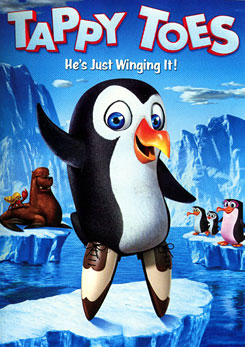
10. Tappy Toes 


Happy Feet was already a cliche enough film about preachy, singing penguins. This movie doesn't even have an IMB page, presumably to keep people from leaving bad reviews on it. Brought to you from the 'brilliant' company, Renegade Animation (which states on its website to bring you "smart, funny, and always original" productions), Tappy Toes is not even what it appears to be on the cover. The film is not done in CGI, but animated in cheaply in Flash. It is about a dancing penguin who is raised by two Skua Birds who eat their own boogers. Seriously. 

9. Age of the Hobbits


Technically, this movie has been renamed Clash of the Empires because it actually sounded similar enough to Peter Jackson's film to provoke a lawsuit. Given that it was released by The Asylum, this perhaps is not too surprising. The company's founder David Michael Latt once said, 

 "I'm not trying to dupe anybody. I'm just trying to get my films watched. Other people do tie-ins all the time; they’re just better at being subtle about it. Another studio might make a giant robot movie that ties into the Transformers release and call it Robot Wars. We’ll call ours Transmorphers."

What an honest man! His vast insights sure make appreciate the artistry and acting in Age of the Hobbits a lot more!

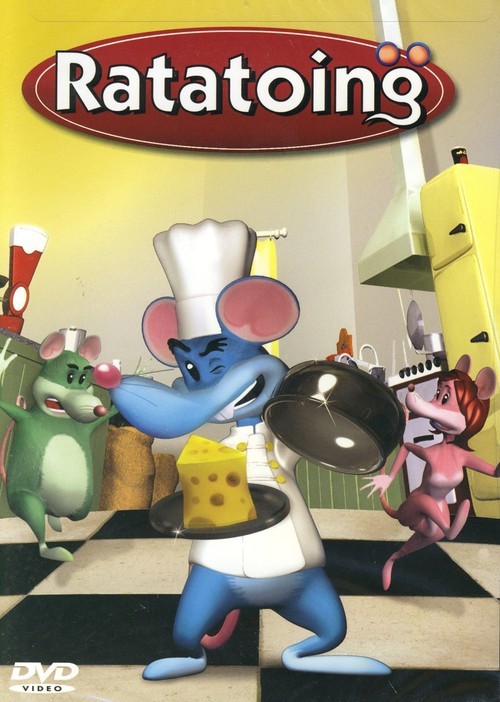
8. Ratatoing


Video Brinquedo is the Brazilian animation equivalent of The Asylum. All of its productions bare an uncanny resemblance to several Dreamworks, Disney, and Pixar films. Ratatoing is perhaps the most infamous of all due to its awkward dialogue and very bad animation. So much so, that it was even parodied on a Cartoon Network show. Currently, Ratatoing has a three percent approval rate on Rotten Tomatoes. Impressive. 

7. The Little Panda Fighter


The Little Panda Fighter is another Video Brinquedo monstrosity. Instead of wanting to become a kung fu panda, however, this one wants to be ballerina... and spends much of his time creepily staring at the audience like on the box art above. He also fights an evil Care Bear at one point. One thing is for sure, after watching this film, anyone can learn to better appreciate the animation that comes out of well known studios (and how they avoid the uncanny valley). 

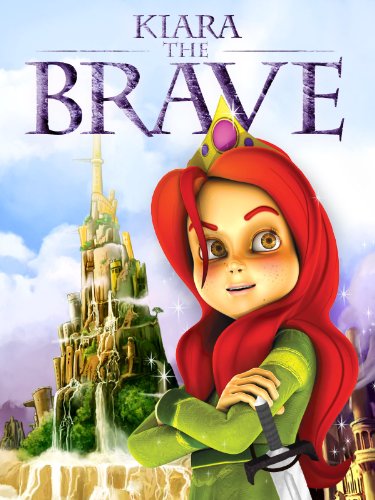
6. Kiara the Brave


Don't be fooled. This movie has very little at all to do with the similarly named Pixar film. It is actually an Indian film called Super K repackaged to look like Brave. The plot follows a boy with superpowers and his quest to save the galaxy. Too bad for all the little girls who were hoping to see a movie about a plucky princess! The Youtube tailer has its comments disabled, so they can not even voice their disappointment. 

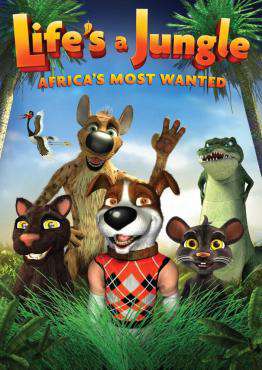
5. Life's a Jungle


Here is film which in no way resembles Madagascar! Still not convinced? Well, it comes with a free downloadable activity kit. Also, here's a fun game kids! Let's play how to spot the uncanny valley again! Note: We are not responsible for any nightmares this production may cause. 

4. The Secret of Mulan


Disney's Mulan and Pixar's A Bugs Life came out during the same year. So somebody decided to release a cartoon with both of them combined. In this version, Caterpillar Mulan fights an evil Hun cockroach and must win the affection of a butterfly prince. The screenwriter's credits include the likes of Jem, Dork Hunters from Outer Space, and Kong: The Animated Series

3. Sunday School Musical


What's worse than High School Musical? The Asylum's Sunday School Musical! Made on the high budget of $8,100, it is guaranteed to offend Christians everywhere. Critics on IMDB are saying, "If a movie is still awful drunk, you know it's a bad film" and, "It's a good laugh if you can appreciate it for what it is - total crap".   

2. The Amazing Bulk


Easily the most unintentionally hilarious mockbuster on this list, The Amazing Bulk fails on every level to be scary or suspenseful. It's a hybrid between a superhero story and Dr. Jekyll and Mr. Hyde. The producers were so lazy that all of the CGI props stick out like a sore thumb and the green screen is the worst in a motion picture that I have ever seen. Don't get me started on the acting. It looks like a parody on Saturday Night Live


Prepare to laugh or cry, you cannot escape the horribleness of this movie. 

1. Titanic the Animated Movie (Both Versions)


The two animated Titanic movies have become semi-legendary on the internet due to how absolutely bonkers they are. The first one, Titanic: The Legend Goes on, involves a rapping dog, Yiddish mice, and love interests that have about three lines of dialogue a piece. The second, The Legend of the Titanic, is even worse. Here the titanic is not sunk by an iceberg, but by gangster sharks and a giant octopus. It also has dolphins that can communicate with people by crying moonbeams. In both versions, none of the characters die except for the villains. This is so insulting to all of those who died on the real Titanic. It would be like if Disney decided to make an Anne Frank movie.


There is a rapping dog on the Titanic. This is the real tragedy. 

Saturday, March 16, 2013

The Life of Pi (Review)

Director: Ang Lee

Company: Rhythm and Hues, Fox 2000 Pictures

Year: 2012

Country: USA


A story about a boy....and his tiger.

One of the most widely talked about films last year was Ang Lee's Life of Pi, winning four Academy Awards and being nominated for seven others. Based off the award winning novel of the same name by Yann Martel, Pi is about how a young man manages to survive a shipwreck and finds companionship in the most unexpected of all places. Pi Patel is a very inquisitive and intelligent person. Since a young age, his curiosity and acceptance of others led him to follow three religions at once (Hinduism, Christianity, and Islam) much to the surprise of his family. Pi's way of thinking and behavior is accepted by his mother, but his more conservative father is not so open to Pi's beliefs and sees his son as irrational. When Pi is 16, his father decides to move from India to Canada in order to earn more money and sell most of their zoo animals. Unfortunately, the Japanese cargo ship Pi and his family is on sinks during a terrible storm. Pi, an injured zebra, a female orangutan, a spotted hyena, and Ricard Parker (a tiger) are the only survivors. Now Pi must find a way to survive alone, in the middle of the ocean, and also keep the tiger fed in order to avoid being eaten.


This was so brilliant I had to reblog it. Credit goes to Rick Slusher. 

One of the best aspects about this film, aside from its stunning visuals, is the fact that it can pull off telling such a heartfelt and fantastical story with a very limited cast. The vast majority of the film takes place on a small boat in the ocean with Pi, portrayed by actor Suraj Sharma, and Richard Parker. If the film was not directed so skillfully, this situation could quickly become boring for the audience. But Life of Pi manages to keep its viewers interested by showing Pi's inner dilemmas and flashbacks as he contemplates how to survive and maintain his sanity. The way Pi must painstakingly must teach himself to fish, collect water, and tame Richard Parker will surely make many people feel fortunate for their own comparatively easy lives. Interestingly enough, Pi discovers that taking of Richard Parker has given him the motivation to stay alive. This is not just because Pi is fearful for his own life, but truly cares for the tiger. At one point, Richard Parker even falls off the boat and is unable to climb all the way back up and is left hanging helplessly on its side. Pi could have left Richard there, but instead lets Richard live because he sees the tiger as his only friend left in the world. 


If situations become tense, sometimes it is necessary to take risks.

Another interesting aspect of Life of Pi is that audience is left to interoperate wether or not Pi's fantastic journey actually happened the way he said it played out. After Pi reaches land in Mexico, ending his 227 day journey, he is questioned by two Japanese insurance agents of the sunken freighter. They find his tale to be unbelievable and ask him for the 'real' version. Unable to convince the two men, Pi tells them another version. In this story, he shared the boat with his mother (the orangutan), a Buddhist with a broken leg (the zebra), and a mean-spirtied cook (the hyena). The cook kills the Buddhist for food and kills Pi's mother in a fight. Pi later returns to the boat and kills the cook. Thus, Pi is Richard Parker himself in the story. The audience is left deciding which version of the story they believe. The novelist who interviews Pi believes in the story with the tiger, despite its strangeness. It is possible that Pi may have created the story with the tiger as a means of coping with his difficult situation or hallucinated certain events (such as the carnivorous island inhabited by meerkats). However, the tiger story could just as well have happened. Either way, Pi survived his life changing journey through faith and his determination and will to live.

Speaking of the movie's special effects, one of the most remarkable things about the filming of Life of Pi is that all of the ocean scenes were shot in a giant wave tank built from an abandoned airport. (In fact, it is the world's largest self-generating wave pool, carrying up to 1.7 million gallons!) The creation of Richard Parker and the film's other visual effects were provided by Rhythm and Hues, which is sadly facing bankruptcy. R&H was contacted for providing the special effects due to animating Aslan the lion in The Chronicles of Narnia (2005). Below is a short clip showing how Richard was brought to life.


Pi has some of the most gorgeous CGI visuals ever created. 

If you have already not seen this film, do yourself a favor and rent it. Life of Pi is one of the most unique and enjoyable of movies to come out recently. Not only is it a visual feast, but it has a memorable story which may seem simple at first, but can be analyzed from different perspectives. Life of Pi is sure to please fans of the novel and many critics alike.


Fun Fact: Richard Parker was named after several real life shipwreck victims.


Rating: 4.5/5

Sunday, February 17, 2013

Disney's Next Film: Taking a Disappointing Turn?

After many, many years in production, Disney is finally planning to release their adaptation of The Snow Queen this November. Well, ....sort of. The was film originally set to be released as early as 2002 and was meant to follow the Hans Christian Anderson fairytale fairly loyally (by Disney standards anyway). It seemed like an excellent choice, especially considering that The Little Mermaid was also a Hans Christian Anderson fairytale. The Snow Queen's plot is about a young girl, Gerda, who must brave dangers to save her friend, Kai, from the elusive and cold-hearted Snow Queen. The story has been adapted several times, most famously by the Russian animated feature which was released in 1957. (More can be read about that version here.)


Illustrations from the original tale by Arthur Rackham and Edmund Dulac. 

The Disney version of The Snow Queen has had such a troubled history likely due to the fact that the film entered production right after The Disney Renaissance had ended. Michael Eisner was very harsh and likely thought that this sort of fairytale film would not be successful. Many of the lackluster films produced when he was CEO were attempts to be more 'modern', but lacked the warmth and appeal of earlier Disney films (i.e. Dinosaur, Treasure Planet, Home on the Range, Chicken Little).

Eisner was eventually replaced by Bob Igner and production on The Snow Queen began again. However, the project was drastically altered. Following the new popular trend of Hollywood films, the film was given an unimaginative and cliche one-word title, Frozen. Is Hollywood implying that American audiences are so dense that that they can remember movies with names such as Hop (2011), Wanted (2008), Taken (2008), and Epic (2013)? Heck, if the executives are that lazy, they should just pitch their next film as 'Careless'. This trend has affected Disney's adaptation of Rapunzel was well. Since The Princess and the Frog 'underperformed', Disney figured that they should rename their Rupunzel movie Tangled, so that it would be a 'catchy' and 'easier to remember'.

But renaming the film Frozen is the least of the concerns. The film's plot has been changed so much that it is not even The Snow Queen anymore. Disney should try to experiment with new ideas and storylines (in fact it would be good for the company to do it more often!), but when they take a classic tale and turn it into something so generic, it only hurts the company's reputation. Here is the official press release of the plot: 

"Featuring the voices of Kristen Bell and Idina Menzel, “Frozen” is the coolest comedy-adventure ever to hit the big screen. When a prophecy traps a kingdom in eternal winter, Anna, a fearless optimist, teams up with extreme mountain man Kristoff and his sidekick reindeer Sven on an epic journey to find Anna’s sister Elsa, the Snow Queen, and put an end to her icy spell. Encountering mystical trolls, a funny snowman named Olaf, Everest-like extremes and magic at every turn, Anna and Kristoff battle the elements in a race to save the kingdom from destruction."

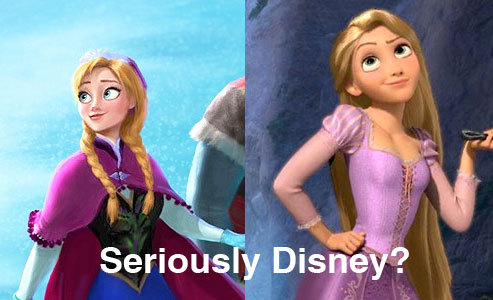
Frozen sounds exactly like Tangled. So much, in fact Disney might as well rename it 'Tangled on Ice'. The plot is far too familiar and lacks the character development and heart in Anderson's original tale and the 1957 version. Renaming Gerda Anna and making her a princess just seems like a cash-grab to sell little girls more makeup and Barbie dolls. The proposed character designs for the film also seem very uninspired and look a lot like those from Tangled. Disney just seems to be playing it safe and not being innovative at all. This is particularly disappointing since Disney's recent efforts seem to have been  trying to renew the spirit found in their Renaissance Era films.  


Some lovely character designs for Gerda and Kai by the late and great Herald Seipermann.


And these....are the designs for Anna and Kristoff Disney chose.


Frozen looks just like Tangled.


Here is how Gerda and The Snow Queen looked in the original 1957 film.


Here are some sketches by Seipermann of The Snow Queen.


This is what Disney choose in the end. Not intimidating.... at all!